Showing posts with label South Australia. Show all posts

Friday, January 16, 2015

Thorn-Clarke wines, South Australia

Thorn-Clarke Wines

thorn-clarke banner

 With the 2015 Vancouver International Wine Festival just around the corner my mind has started leaping ahead to the star-studded line-up of world-class winemakers who will be jetting in. Over 1,700 wines from 170 wineries will be poured and some of the most exciting, to me, are from this sixth-generation producer from the Barossa valley.

 Let's be honest about why I'm so excited to meet these folks: it's all about quality. But maybe I don't mean quality in the way that you're thinking. It's not just that this family, who've been pouring heart and soul into South Australia since the 1850's, released an entire line-up of wines that are great value for money. Hey - it's the "Golden Age" of wine! We're used to getting great wine for a great price.
the vineyard of St Kitts
THE thing to me is that I'm continually impressed, each and every year, because this is what they do with every vintage. I'm entering my fifth year writing about wine (a "youngster" still to many) and I taste a silly amount of wine... on average it's over 2,000 per year. And I can tell you, without reservation or hesitation, that there are very very few producers who are releasing quality of this magnitude year after year after year. Every year just a little better than the last, every wine being sold for less than it's true value.
The Clarke family state categorically that they:

"-take a long-term view of the future and our goal is unashamedly to be still growing grapes and making wine for another six generations."

And this is how it's done. This is why James Halliday, who knows more about Australian wine than any person who ever walked the Earth, has given Thorn-Clarke 5 stars for the ninth time in a row! Not familiar with Mr Halliday? Suffice it to say that when a winery earns it's first 5-star rating, it's going to be written about in the news. It is the benchmark for "outstanding quality" in Australian wine and is used as the yardstick by which every winery judges it's calibre versus it's colleagues and it's own previous vintages.

Nine times in a row means that the man who knows the most about Australian wine considers this tightly-knit team to be amongst the top echelon of a country brimming with brilliance. And when one hears the stories - of David Clarke testing soil samples by the light of the headlights of his car, at night, so as not to arouse suspicion in local farmers... well, stories like this are what feed the intuition that herein lies something beyond a desire to make good wine, it's (mild) obsession in the best of all possible ways.

This is the team that outfitted entire vineyards with moisture-probes: calibrated to only allow the vines access to irrigation under the most stringent conditions. Is this an environmental responsibility? Of course it is, but the benefit to you and I is that Thorn-Clarke is keeping it's berries small; less water per grape means a higher concentration of flavors!

Planting cover-drops between the rows of vines, planting thousands upon thousands of trees on the properties; these are environmentally responsible as well right? Once again - the winery and it's team are to be lauded, but as someone who's just one generation off the farm I'm thinking about the bio-diversity! What is happening is a return to, as some call it, ancestral farming. Through these techniques Thorn-Clarke is creating an environment that will allow full expression of flavor to come through the grapes and give their land it's own unique taste.

And this vision is all the more apparent when one hears them speak of their ardent efforts to now return the local waterways to " -a pristine example of native vegetation.". It's funny in a way, to think that in 100 years we as a First-World culture have come full circle; from the early 1900's and respecting the land and it's cycles, to the mid 1900's when we first decided that we needed to control Mother Nature and her many flights of whimsy, to the early 2000's when the trend is coming back to a place of respect.

And perhaps that's what separates Thorn-Clarke most of all from their competitors. In a time when quality is easier to come by then ever before and even great value can be found on almost any wine-vendor's shelves, respect in it's most sincere form is still rare enough to be extolled when we see it. Respect for the land, respect for the water, respect for the grapes and the winemaking process and, most of all, respect for you - the customer.

I hope you find value in my thoughts on these beautiful wines.

2011 "Terra Barossa" Shiraz-Cabernet-Petit VerdotThorn-Clarke 2011 Terra Barossa shiraz, cab, petit verdot

89+/90 points, $13+ USD, Great Value

... Expansive yet not expensive: this wine is rich with aromas of wild blueberries and Saskatoons, tomato leaf, warm earth, hints of vanilla, oak. On the palate is a perky acidity with fine, well integrated tannin and an intensity of flavors that well-matches the nose. Very good balance and structure, the length on the palate is also substantial for the price.
... When I smell and taste those darker berry flavors: blueberries, black currants, Saskatoons, I immediately think of venison! To me there's nothing that would pair better with this then a dish of venison stew/ragout with steamed new potatoes and fresh garden veggies. Although, I say that and then I savored the bottle over successive evenings and a ration of premium, hand-made, fresh peppercorn beef jerky from Hopcott farms, Pitt Meadows.

2012 Cabernet SauvignonThorn-Clarke 2012 Terra Barossa cab sauv

89+ points, $16+ USD, Great Value

... What I love about this wine is its ability to express young Cab: big, beautiful, pear-shaped tones of ripe red fruit, summer flowers, the backbone of pencil-shaving/minerality and the warmth of musk/forest aromas. The bouquet is inviting, the palate offering substantial yet well balanced acid and more of the trademark well-integrated tannin though these are more substantial then the previous blend. Great structure.
... Food pairings abound! A natural for beef dishes, this will also bring beauty to the meatier Italian dishes like a lamb bolognese but I found it light enough to serve with grilled panini for lunch. This is a terrific introduction to the "softer-side-of-Cab" and pairs well with Tuesday nights and a warm fireplace :)
 

 2010 Barossa "Quartage"Shotfire 2010 Barossa Quartage

Left Bank Bordeaux-styled blend: Cabernet Sauvignon, Cabernet Franc, Malbec, Merlot

91+ points, $18-$25 USD, EXCELLENT Value

... it's no secret that I love Bordeaux, but good Bordeaux is becoming out-of-reach for a writers salary. Top-tier Bordeaux is out-of-reach for most doctors and lawyers. But~! But there is great Bordeaux-style coming from all corners of the world and Australia is certainly a part of that wave. This wine is a personal favorite of mine and I have been constantly impressed vintage after vintage. For the money, this may be one of the best values in the North American market! Rich, nuanced dark floral aromas burst from the glass with violets and dark roses followed by black currants/black cherries/red raspberries. The palate is brisk with lean/focused young red currant acid, fine/chalky tannin and a concentration of flavors that well-mimic the nose and outperform the price-tag. Excellent balance, very good structure, this wine drinks well now and holds for several years but will not develop in bottle due to the Stelvin enclosure.
... Food pairings? Try cigar pairings! From Rocky Patel "Decade" to Montecristo, this wine is a cigar-lovers delight. If you must pair it with food, consider the price and then spoil yourself: this is a decadent treat for a Wednesday afternoon and gourmet pizza, capicollo panini or a simple steak frites... use great ingredients and let the beauty of this Barossa shine!

2010 Barossa Shirazshotfire 2010 barossa shiraz

90+ points, $15-$22 USD, Great Value

... first, a word on Shiraz if you're thinking right now "Oh - I don't like Aussie Shiraz, I only like French/Spanish/California/etc". In a recent blind tasting with a dozen highly skilled industry professionals, no one could tell which Shiraz out of ten bottles was from Australia. Well... I could tell one of them, but only because I was incredibly familiar with that particular winemaker and knew his "signature". But my point is that there is a new era in winemaking and what you tasted 10 years ago (or older) isn't necessarily what you will find today! I have shown colleagues time and time again that the "New Face" of Aussie Shiraz is a sophisticated, elegant one that merits attention.
... Harmonious. This wine achieves a delightful balance of dark floral aromas, dark exotic chocolate and warm earth tones. The palate is awash in fresh red berry flavors and achieves mouth-watering acidity yet in a balanced and approachable manner. Very good concentration of flavors that match the nose with that ever-present peppercorn finish, to me this is a great example of the modern Shiraz.It will keep well for several years in cellar but, once again, will not develop due to Stelvin enclosure. Enjoy it young with sea-salt and olive grilled lamb and an herbaceous quinoa-tabbouleh salad!

2010 "William Randell" Barossa ShirazIMG_1191

93+/94 points, $40-$50+ USD, WORLD CLASS

*97 points James Halliday
*in my TOP WINES, 2014
*minimum 1 hour decant or 2 runs through the aerator
... made from small, select lots and only in the best years, this is the essence of truly Great Barossa without the staggering price that some can fetch. That James Halliday of the Australian Wine Companion would bestow 97 points on this is enough for any reasonable person to ascertain that here-in lies beauty... created as an Ode to one of the patriarchs of the Clarke family, this wine offers the "Holy Trinity" of stunning: balance, structure and concentration.
... if you open this wine and find the aromas closed, just try decanting another 30 mins to an hour; it is impossible to over-decant this. To the eye this wine is so dark in it's bruised purple tones that it appears black in the glass. I was most struck by the plethora of floral aromas; the usual suspects of red and dark berries, dark cocoa, peppercorns and warm Barossa soil abound, but the lifted scents of violets, soft roses and irises is both feminine and tremendously alluring. On the palate, it presents tight, lean, well-focused red currant and young red raspberry acid that reminds one of Northern Rhone; tremendously fresh. The tannin is full, yet ultra fine/chalky/chewy and is delightfully approachable considering it's relative youth. The flavors are as full, and full of life and dimension, as the bouquet; a true craftsman's work. If you would drink this now (and it is utterly delightful now) I would highly encourage buying another few bottles to set aside. This wine will live and evolve for at least 15 more years with grace. Food pairing? Consider this dish I created for my Chef du Cuisine final project:
lamb, 3 ways               (sourced from Elliot Ranch, Strathmore, Alberta)
1. tenderloin (wrapped in duck pate and spinach) on braised chicory
2. two points of rack, baked in coarse salt with vanilla bean & fresh thyme, Hainle vineyards Gewurztraminer icewine poached Anjou pear, warm crab-apple compote
3. individual tortierre with braised shank and shoulder, charred heirloom tomato ketchup
the vineyards of Thorn-Clarke
Many thanks to Renaissance Wine Merchants (importer to Western Canada) and Thorn-Clarke Wines for the very generous sample bottles. As always you can find more recipes, free wine reviews and my notes on premium distillates and cigars on:
Twitter               Facebook              Pinterest                         Google+

Friday, March 16, 2012

Dandelion vineyards "Lionheart of the Barossa" Shiraz

Last January I happened to be in Edmonton, Alberta to celebrate a family function; there was food, there were long talks and, of course, there was wine. For all that my family may be Irish, we drink wine as if we were Italian.

   So it was a real treat when my father took me for a drive because he said he knew a "very special" wine-shop. I told him that the shop in question would have alot to stand up against as I have virtually grown-up (as a wine-steward) in the semi-mystical http://www.marquis-wines.ca/ which is a pantheon of oenology in Vancouver, BC. I was not disappointed.

   The store in question had certified sommeliers on-hand to lead me through a list of wines I had rarely seen... for those of you not in Canada we here are in the Dark Ages: we have different liquor boards for each province and shipping between provinces prohibitive. And so the wines my father sees are rarely the ones I see and the two of us almost never see wines that make it to Ontario or Quebec. But I digress.

   One of the sommeliers pointed out the Dandelion vineyards (http://www.dandelionvineyards.com.au/) and stated that categorically it was one of the finest Shiraz he had in stock. At almost $40 CAD it was worth about $60-$70 in my own province and I was - reluctant. In the end, I trusted my father and bought the bottle. A 2008 "Lionheart of the Barossa"... something worth cellaring for years upon years I imagined.

   A few days ago I was becoming despondent with lacklustre syrahs and saw the old Lionheart on a shelf and thought: "Stelvin enclosure; it must be made to drink young. Meh, how bad could it be?"

   I've managed to lose my aerator somewhere, and because of the Stelvin enclosure (screwtop) I decided against decanting. I opened the bottle, poured out a few ounces and lifted to my nose. That was when the magic began for me.

Dandelion Vineyards, Lionheart of the Barossa Shiraz
$35 CAD in Alberta, not available in BC
95 points James Halliday
94-95 points AStudentOfWine

vine age:   old vines, many over 100 years
altitude:   725 feet (220 metres)
fermentation:   25% new French oak
maturation:   18 months, then racking without fining or filtration
winemaker:   Elena Brooks, Bsc
  • visual:    clear; fully intense inky-purple core with slightest cherry rim
  • nose:   clean; moderate+intense and developing bouquet of red currants, black raspberries, developing secondary notes of old worn leather and cedar, dried savory herbs and light earthen background
  • palate:   clean; dry, moderate+ to fully intense (red currant/sour cherry acids), moderate+ (silky yet grippy) tannins, moderate body, moderate ABV (14.5%), moderate+ to fully intense youthful flavors of sour cherries, young raspberries, small strawberries and blueberries, light notes of savory herbs/light summer florals, soft background of warm earth. Stunning balance and structure, long length
  • conclusion:   a rarity; a wine that drinks so brilliantly whilst young and yet could cellar well for half a dozen years with ease. Peaks 2017-2020
  • FOOD PAIRINGS:   because of the vibrant acids of course I'm going to suggest a little fat, but not as much as I normally would... the acids are so delicately integrated that I'm going with grilled rack of lamb with caramelized onion and blueberry compote on Manitoba wild rice latkes with steamed Swiss chard.

  This was an experience for me.

Barossa vines, 100++ years
   This wine drinks with the vibrancy of a Melbourne Shiraz, the lively acidity of McLaren Vale, the freshness of the Langhorne and the warm suppleness of Barossa. It is quite simply one of the finest examples of Shiraz that I've ever had and would love to sample it at 6 or 9 years old, when I imagine it will have grown into the mature grace of a Rosemount Balmoral (which is the finest kind of compliment).

   For all of my credible research skills, Dandelions vineyards in still an enigma to me. Established in 2009, Dandelion Vineyards Pty Ltd is a private company categorized under Crop Planting and Protection and located in Port Willunga, SA, Australia. That's what the records state, but the first vintage of The Lionheart is 2008...

winemaker Elena
 No matter, it seems as though a Canadian businessman/vigneron and an Australian patriarch/vigneron sought the fresh ideas of a young Adelaide graduate and created Dandelion. They only source from family estates, and the quality is self-explanatory. Not convinced?

   James Halliday may know more about Australian wines then anyone else on the planet. Period. I thought this was at least a 92-point wine after 10 seconds in my glass. Without an aerator. James Halliday agreed and gave 95 points.

   I give this, at 4 years old, 94 points and feel it can easily grow into 95 or even 96 points. It's smooth, sophisticated and layered beyond belief for the price. If you're in Alberta or Ontario, spend the money and discover new winemaking with Old-World sensibility.

As always, I welcome your questions and comments.

CINCIN~!!!     SLAINTE~!!!     CHEERS~!!!

Saturday, November 12, 2011

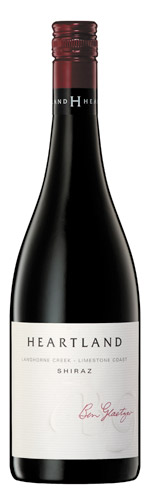
Heartland wines by Ben Glaetzer

Have you ever gotten together with your friends and done something exciting? Driven to Las Vegas, kayaked to SaltSpring Island, gone windsurfing in Mexico, started a winery...
   Started a winery?!
   Well that's Ben Glaetzer's idea of fun and he managed to wrangle together a posse of like-minded vinophiles such as Geoff Hardy, Grant Tillbrook and Scott Collett. These men are all leaders in their industry in Australia and their names inspire confidence.

   Geoff Hardy is a fifth generation winemaker in South Australia and his children are even now being groomed to take a more pivotal role in his operations. Grant Tillbrook is a number-crunching wizard whose list of consulting jobs in Australian wineries is staggering... wine-making may be an art-form, but without the right numbers to support it, wineries are incredibly expensive propositions. That leaves Scott Collett whose family has been working with wine in the McLaren Vale for 50 years and show no signs of stopping.
   An inspired group of individuals, but I've often heard it said that "too many chefs spoil the soup". In this instance, nothing could be further from the truth, and it must be due in part to it's captain: Ben Glaetzer.
    Ben literally grew up in the wine industry; Ben's uncle John Glaetzer was the second employee at Wolf Blass Winery (see my article on Wolf Blass at http://astudentofwine.blogspot.com/2011/09/wolf-blass-gold-series-shiraz-viognier.html). Ben's father Colin is a renown winemaker who won the prestigious Winemaker of the Year award in Australia. Even Ben's two brothers are winemakers. One could say that genetics came into play when Ben's received the Quantas award for young winemaker of the year in 2004 and was called a "brilliant winemaker" by Robert Parker Jr.
   So what does the award-winning winemaker do? He gathers a team of like-minded individuals and creates the Heartland brand of wines from South Australia (http://www.heartlandwines.com.au/) which still focus on quality, but with value being a high priority and not afraid to take a few risks in the vineyard.
   Great pricing, great quality, and all from one of the most innovative winemakers in Australia today! What else do you want? Well I for one want to be able to drink the wine right away - as opposed to Ben's ultra-premium Amon-Ra which deserves ample cellaring. Done. All of these wines drink superbly right away and right from the bottle - I didn't even need to decant.
   So what's the magical key to making wines like this: is it only due to the efforts of the massively gifted confederates? Much as some might like to say "yes", the truth is that terroir plays into the equation just as much (if not more) then anything else.
vineyards in Langhorne
   Heartland wines are grown on two distinct properties; in the Langhorne Creek and on the Limestone Coast. The Langhorne Creek is about 70km, or an hour's drive, south-east of Adelaide in South Australia... it's a beautiful place that has been producing wine longer then almost anywhere in this country. Settlers came here in the early 1800's and by the 1850's a wine industry was already bustling. The area is known for the cooling effects that the local lake Alexandrina has on climate, and has been recognized as a "cool-climate" viticulture region.


a stickleback tree on the Limestone Coast
   The Limestone Coast is almost 300km south-east from Adelaide and shares more in common with it's famous neighbour to the east: Coonawarra. The Limestone Coast soil has a high amount of oxidized iron in it's soil, creating what is known a terra rosa or red-soil. The region is also known as having very dry (even by Australian standards) summers which leads to stress on the vines... this stress is good stress, not like when your boss tells you that he's fired someone else in your department and left all of their work for you. This stress leads to reduced yields from the vines which means that there will be a greater concentration of flavors.
   So Ben, Geoff, Grant and Scott decide that they want to use their powers of oenology for good in the world and create unique, well-crafted wines for a reasonable price. How to accomplish this? They source out regions which don't have aren't as well-known yet so they can afford to sell the yields for modest fees. The results speak for themselves.
2009 Heartland Stickleback Red
 $18   *** Very Good Value ***

Varieties: Cabernet Sauvignon 45%, Shiraz 38%, Dolcetto 9%, Lagrein 8%
Region:    Langhorne Creek 67%, Limestone Coast 33%
Vinification: fermented on skins for 5 days before pressing.
                      Malolactic fermentation in 2 and 3 year old oak barrels
Maturation: 12 months in 2 to 3 year old; French and American oak
  • visual:   clear; fully intense plum/garnet core with slightest cherry rim
  • nose:   clean; moderate+ to fully intense developing aromas of red and black currant, red and black raspberry, blueberries, slightly spicy earthy terroir
  • palate:   clean; dry, moderate+ (red raspberry) acids, moderate+ (soft chalky) tannins, moderate body, moderate+ alcohol (14.5% ABV), moderate+ intense youthful flavors that mimick well all the red and under ripe berry notes.... the Shiraz makes its presence known with the spicy finish and the Langrein helps with the fresh acids. Very good balance, and structure, medium+ to long length
  • conclusion:   drinks well now but can cellar easily for until 2014. Will not develop appreciably
  • FOOD PAIRINGS:   crisp red wines need a bit of fat; pair this wine with a Grilled ribeye steak with kosher seasalt and smoked paprika rub

2009 Heartland Shiraz
$25   **** EXCELLENT VALUE ****
Varietal: 100% Shiraz
Region: Langhorne Creek 95%, Limestone Coast 5%
Soil: Langhorne Creek: Sandy Loam, Limestone Coast: Grey marl over deep limestone
Age of vines: 16-18 years
Vinification: crushed, then pumped over twice a day. Ten days skin contact. Extended maceration
Maturation:  14 months in new to 4 year old; 70% French, 30% American oak hogshead barrels
  • visual:   clear; moderate+ bruised plum/garnet core with slightest cherry rim
  • nose:   clean; moderate+ intense and developing aromas of red berries, spicy black licorice (no, really, that's what it smells like to me), dark espresso and chocolate notes
  • palate:   clean; dry, moderate+ (raspberry/currant) acids, moderate (soft, silky) tannins, moderate+ intense and youthful flavors mimicking well the nose with emphasis on red currant, red raspberry with the spicy finish known for Shiraz. Very good balance, excellent structure with long length
  • conclusion:   drinking well now, this wine will certainly reward cellaring for the next several years. Drink 2014-2018
  • FOOD PAIRINGS: a natural for lamb with it's lively acids, consider braised lamb shank with prosciutto-tomato and fresh sage reduction over parnsip and Yukon Gold potato mash

2009 Heartland Cabernet Sauvignon
$25    **** EXCELLENT VALUE ****
Varietal:  100% Cabernet Sauvignon
Region: Langhorne Creek 73%, Limestone Coast 27%
Soil: Langhorne Creek: Sandy Loam, Limestone Coast: Grey marl over deep limestone
Age of vines: 12-15 years
Vinification: crushed into 10 tonne open fermenters, and left on skins to cold macerate for three days prior to yeast inoculation. The wine was pressed to oak for malolactic fermentation, then racked and returned to oak
Maturation:   12 months 2 to 4 year old; 80% French 20% American oak
  • visual:   clear; fully intense garnet core with cherry rim
  • nose:   clean; fully intense developing aromas of blackberry, warm winter spice, light tobacco and cigar box, light eucalyptus or menthol notes
  • palate:   clean; dry, moderate+ (red raspberry) acids, moderate+ to fully intense (soft, chalky) tannins, moderate+ body, moderate+ alcohol (14.5% ABV), moderate+ intense and youthful flavors mimicking the nose once again with emphasis on the red berry notes and a lingering earthy background... the terra rosa shows through. Excellent balance and structure, long length
  • conclusion:   drinking well now, this wine also benefits from cellaring. Drink 2014 to 2018
  • FOOD PAIRINGS:   rich red wine with a bit of zippy acids? Consider a Butter poached beef tenderloin with slightly spicy roast garlic compound butter

Heartland wineries on the map


   And so I'm left at the end of a truly wonderful tasting asking the exact same question I did at the beginning. Which is mightier in winemaking: the winemaker or the terroir? Obviously the answer is more complicated then just black or white.. it's neither one nor the other. The truest joy in winemaking comes for the consumer when winemaker and terroir are working in unison as evidenced by the above.

   My joy these days is measured by the LittlestStudentOfWine, who gave her smiles of approval when she smelled each and every one of these wines. My smiles were not far behind...

As always, I look forward to your comments and questions.

CINCIN~!!!     SLAINTE~!!!     CHEERS~!!!

Sunday, September 11, 2011

Wolf Blass gold series Shiraz-Viognier

I remember first seeing the name "Wolf Blass" on an Australian wine and thinking "That's a silly name for a winery." I had no idea that there really was a man named Wolf.

   Well there really is a Wolf, and he's been making wine for longer then I've been alive... a long story made short; Wolf Blass was born in what was Eastern Germany in the 1930's and became the youngest person to ever earn the Kellermeister Diploma, or Master's degree in Eonology. He was just past twenty years of age.

   Some might think that he had been born with the grapevine in hand... not so. In fact, Wolfgang fell into the wine industry quite by accident~! Wolf ran away from school as a teenager and was given an ultimatum by his parents: return to school or apprentice under a winemaker. Well, school wasn't really Wolf's thing you see - so there wasn't much of a choice for him, and the world of wine has changed as a result of that ultimatum.


   Wolf Blass winery (http://www.wolfblass.com.au/) was one of the first wineries in Australia to start commercial production of Shiraz-Viognier. Shiraz, or Syrah as you may know it, has been grown to great success in South Australia for decades but what of Viognier?

   Viognier is a relative newcomer to the Australian wine-scene and the blend of the two is really more then just a blend. Viognier is a white grape varietal that in it's youth has an abundance of floral aromas, and depending on where it's grown - will give rich fruit and floral palate with crisp acids. Aging the wine is a risk though as the floral notes tend to die quite quickly (sometimes under 5 years).

   And then there is the blend which is more-then-a-blend; it's a co-fermentation. Anywhere from 2% to 8% of the grapes used in total production will be Viognier and it is this varietal which ends up preserving the blend's lively colors as well as fundamentally altering the flavor compounds and phenolics.

   It was a risk when it was first conceived, and even today there are winemakers and sommeliers alike who will contest it's merits. To me, there are obvious joys to the co-fermentation and downfalls: a joy would be the lightness that Viognier brings and "tones-down" the South Australia Shiraz' natural inclination to big, bold, jammy characteristics. There are more floral notes of course, and to my palate a richer, more developed fruit profile. On the downside however, there is that tendency for the palate to diminish more quickly than normal... a well made Shiraz can easily last 10 years or more, but I find many Shiraz-Viognier will have lost their flavors in approximately 5.

2005 Wolf Blass Gold Label Shiraz-Viognier
Adelaide Hills, South Australia
$38   *** Very Good Value ***

varietals:   95% Shiraz, 5% Viognier
maturation:   15 months in oak (18% new oak) with a small amount unoaked to retain freshness
  • visual:   clear; fully intense bruised plum core with slightest brick rim
  • nose:   clean; medium intensity and developed aromas of lifted dark florals (irises, lilies), dark berries (blackberries, black raspberry), light cigar tobacco, savory winter spices (allspice, clove, pepper), background of baked earth
  • palate:   clean, dry, medium+ (red currant) acids, medium- (soft, velvety), tannins, medium body, medium- ABV (surprising considering it's 15%), medium intense and developed flavors mimicking the nose with particular emphasis on crisp red berries (red currant, red raspberry)... light florals mix well with restrained oaking and light spice notes. Very good balance, excellent structure and long length
  • conclusion:   this wine has peaked, and if you still have a bottle - drink it now~! Enjoy 2009-2012
  • FOOD PAIRINGS:   crisp, vibrant acids in a red wine with light floral notes and moderate tannins? I can certainly understand people who want to pair it with venison~! consider a Maple glazed venison flank steak (medium-rare) with pure Kentucky bourbon demi-glace, steamed spaghetti squash and wild mushroom ravioli... just a thought :)

  To be honest, this was the first Wolf Blass wine that I've tried in years (and years). I can still remember the 1990's when they absolutely dominated the Canadian wine market and were simply the wine to drink. There was a reason for that: they were great wines for the price. I stopped to show myself that I'd grown beyond the "old favorites"... well maybe I've grown up enough to come back to those old favorites. After all, they became our favorites for a reason:

   Quality.


As always I welcome your comments and questions.

CINCIN~!!!     SLAINTE~!!!     CHEERS~!!!

Saturday, June 11, 2011

K1 - Kuitpo Vineyard by Geoff Hardy


Bec Hardy

The first time I met Bec Hardy (daughter of Geoff) I knew it was going to be difficult not to like her... Bec has a gentle strength about her; a calm determination that could seem aggressive if it weren't for the brilliantly warm smile that seems a permanent part of her demeanor.

   Bec and I met as she and her new husband were taking a week's honeymoon to do business with with Opimian society (www.opim.ca). Bec was making a whirlwind tour of Canada, with 5 stops in 5 different cities in 7 days (much like a rock-star?). I was fortunate enough to share about an hour with her at the prestigious Teahouse restaurant in Stanley Park, Vancouver (www.VancouverDine.ca), her last stop before returning home to K1 vineyards in South Australia.

   Bec and I took the opportunity to discuss K1 vineyards' approach to several topics including how and why they choose their varietals, the development of the Asian wine market and the challenges of competitive pricing in a depressed global economy.

   Geoff Hardy began K1 vineyards (www.K1.com.au) in the hills above Adelaide in 1987 with 30 acres of what was then considered by some to be "unsuitable land" for viticulture. Geoff was not to be swayed however and though it was untested land, Geoff had been active in the field since earning his diploma in Wine Production in 1977 and knew to trust his instincts. Geoff was certain that this (relatively) high altitude area would give a "cool-climate feel" to his wines.

   Geoff planted Chardonnay, Semillion, Sauvignon Blanc, for the white varietals and Pinot Noir, Merlot, Shiraz, Cabernet Sauvignon, Temperanillo and Tannat for the reds in the early 1990's. An impressive array of varietals for a winery that produces 8,000 cases per year. Geoff was ambitious however, and though he splits his time between consulting for wineries throughout the world and maintaining his role as General Manager, by the year 2005, Geoff had managed to introduce Viognier, Riesling, Gewurztraminer, Gruner-Vetliner and Arnais.


   Gruner-Vetliner or GruVe is a subject of some passion for Bec Hardy as she talks about the work that her family is doing. GruVe really is a newcomer to the Australian market, with the very first planting happening in 2004 and the Hardy family coming in second in 2005. Native to Austria, where over 30% of all plantings are Gruner, this varietal produces crisp white wines with vibrant acidity and (when made well) a rich and nuanced light floral bouquet. Bec and I agreed that no one in the wine industry would have taken the notion seriously even ten years ago: that someone would plant Austria's most prized varietal in Australia? And that it would turn out so well? And that Australians would go absolutely wacko for it, drinking it faster then anyone can produce it?

   Well everyone is taking it seriously now.


   And what about Pinot Noir, the heart-break grape? Once again, Australia wasn't renown for the finesse of this wine but Geoff Hardy used his accumulated 5 generations of winemaking skill to plant at over 300m, where the cooling breezes from the Gulf of Saint-Vincent moderate daytime temperatures. Bec says that her father is partial to the Pommard varietal which produces a lighter, more elegant style of wine and is best enjoyed at least a year after bottling (but Bec prefers it after 3 to 4 years). True enough, whilst this Pinot can't be compared to the wines of Beaune, Geoff is releasing product that is impressive in it's texture and balance and is a stunning value for the price.

   And what of the emerging wine market that no one believed in 10 or 15 years ago? Asia is insatiable in it's desire for wines of quality these days. Gone are the days when the only thing that sold was Icewine - now winemakers from around the world are sending their best in everything they do. It's important to remember that Asia is still an emerging market however, and are easily swayed by big names...


   Luckily for the Hardy family, they have that legacy. K1 vineyards sells approximately 20% of it's yearly inventory to Canada and all of it through the Opimian society. "Why?" I asked Bec, "Why would you choose to sell to the other side of the world?"

   I think it's because the Hardy's have a fondness for the Canadian market. Because we "get" them. We understand the Hardy's dogged determination to pull something beautiful from the dusty soil... most of us are first or second-generation Canadians and know what it's like to start something from scratch - with grand ambitions and high hopes. It's a struggle. For any farmer anywhere in the world, it's a daily struggle and Canadians are linked closely with the land. We know what the Hardy's must go through to bring such understated elegance to the bottle and for such reasonable pricepoints.

   And isn't it nice to be able to say that? In this day and age, when some winemakers charge exorbitant fees for wines that are hardly worth the price of admission - that a winemaking family now in it's 6th generation is willing to do the math necessary to charge a price based on the costs of production. I love a good Bordeaux vintage as much (or more) then the next man, but when wines reach $1000/bottle I find it hard to believe that the price is based on anything other then greed (and supply vs demand). It's much easier, I imagine, to simply calculate the cost of making a wine one year - and then charge what the market will bear based on that original cost... it's certainly easier, but it means alot to me that K1 is willing to do the math every year.

   And what it means is that every year I will be going back to K1 releases with excitement and anticipation; whether it be to try a "cool-climate" Australian Chardonnay (a brilliant innovation that is bringing life back to Australian Chardonnay sales), or a classic Cab-Shiraz blend from their McLaren Vale property - the Hardy family is proving that in the world of winemaking, family businesses are worth supporting.


As always, I look forward to your questions and comments.

CINCIN~!!!      SLAINTE~!!!     CHEERS~!!!

Sunday, April 10, 2011

D'Arenberg "The Footbolt" Shiraz, McLaren Vale, Australia


Chester d'Arenberg Osborn

Chester Osborn, winemaker and viticulturist at D'arenberg winery, says:

   "It is my aim to never make a wine that looks sterile...I want to see it all in my wines; I want a wine that has edges of all sorts of complexities such as spices, meats, compost and forest floors etc… "


   I'm used to hearing words like that from wineries that charge upwards of $30 to $50 and beyond - but recently I'm hearing more and more winemakers with modest prices saying the same thing. They seek to express their terroir with all of it's nuances, quirks and "flaws". I say "flaws" because some people look at compost and forest floors and think: "how could a consumer ever want to have that in their Shiraz?"

   How could I not want that, if that's exactly what your land is trying to impart on the wine?

   D'Arenberg winery (http://www.darenberg.com.au/ ) is in the McLaren Vale of South Australia. A robust 180 acres under vine, d'Arenberg has plantings aging back to 1912 in the case of their Shiraz. They have a versatile and complex portfolio including GSM blends, Chardonnay, Pinot Noir, Sparkling wines, Fortified and so on... an impressive amount of work for one man to lead the entire winemaking and viticulture team. Chester seems to be doing it with his own inimitable style and winning awards and consumer loyalty as he goes.

d'Arenberg in Spring
   D'Arenberg wines are now sold in over 60 countries around the world - not bad for a mid-sized (by Australian standards) winery. The winery was recently (2010) awarded the Winery of the Year title from http://www.wine.com/ , one of the largest wine retailers in the world. If that wasn't enough, they also recognized the d'Arenberg Stumpjump Shiraz as being the Wine of the Year. At the McLaren  Vale wine show, the winery also won 3 (count 'em three) gold medals and the trophy for Best McLaren Vale pre-release wine. Then in Jim Halliday's Australian Wine Companion 2011, (http://www.winecompanion.com.au/ ) , the d'Arenberg Deadarm Shiraz earned 94 points - placing it as a permanent fixture in the Australian wine icon constellation.

2006 "The Footbolt" Shiraz, d'Arenberg winery
McLaren Vale, South Australia
14.5% ABV, $24 CAD   ** EXCELLENT VALUE **
soil :              primarily ironstone and chalky rock with a thin covering of clay loam
maturation :    20 months new and old American and French oak
  • visual:   clean; fully intense plummy garnet core with slight cherry-brick rim
  • nose:   clean; moderate+ intense developed nose of candied blackberry compote, worn leather, dried dark flowers, dried black cherries, soft and yet rich dark coffee nuances, finish of light cinnamon
  • palate:   clean; dry, moderate+ red currant acids, moderate+ chalky tannins, moderate+ alcohol, moderate body, moderate+ intense and developed flavors mimicking the nose well... hints of very dark chocolate and black plums. Very good balance and structure, medium+ length on the palate
  • conclusion:   drinks very well now to 2013 due to vibrant acids and good concentration of flavors
  • PAIRINGS:   at the D'Arrys restaurant at the winery - they have a breaded lamb chop which I think would pair perfectly... use some savory herbs like wild thyme and rosemary and they will play delightfully off the dried fruit and coffee flavors in the wine


Joseph Rowe Osborn
   An impressive pedigree for a winery started by a man (Joseph Rowe Osborn) who abstained from drinking, and then his son Frank who sold his racehorses to start the d'Arenberg legacy. D'Arenberg was Frank's mother's maiden name, and he took the name for his winery to honor his mother, just as Frank's son D'Arry then named this wine "The Footbolt" for his father's most prized and successful racehorse. Now in it's fourth generation as a family business, Chester seems more then capable of giving respect to all the generations that came before him and yet still pushing off and driving the winery in his own direction.... a toast then:

   "to respecting where we came from, and daring to go where we dream"

As always, I welcome your comments and questions.

CINCIN~!!!     SLAINTE~!!!     CHEERS~!!!

Saturday, March 26, 2011

Abbey Rock Coonawarra "Old Schoolhouse" Riesling

Riesling is one of those varietals that I find people love or hate, which is really odd when one considers the vast diversity of rieslings in the world.

   Riesling can be sweet or dry - it can age well under great circumstances and can easily be enjoyed quite young. Riesling pairs well with traditional German, Swiss and Alsatian foods like schnitzel, seared pork with saurkraut and sour cream, even a raclette of cheese. Riesling is also a dream with a great grilled cheese sandwich. Riesling, in other words, is capable of greatness.

   But nothing in what I've said would make one put the thought Riesling with the thought Australia, but it's a more natural fit then one might think. Many Germans emigrated to Australia in the last 1800's and gravitated to the (by comparison) cooler parts of the country. Granted, snow may be a dream for most Australians, but in South Australia, about 300 km south-east of Adelaide is the wine-growing region known as Coonawarra (which means honeysuckle in aboriginal).

photo courtesy of South Australia
   Coonawarra has only recently become famous for it's wine production. Before the 1950's it was unknown even to Australians, but it was Samuel Wynn who discovered the famous terra rosa soil, which has spawned a whole generation of Australian winemakers who gave up their roots in fortified wines and moved into table wines.

   Jump to 2001 and winemaker Les Sampson, viticulturalist Ted Apted and wine marketer Michael Parkinson.  This group of fine fellows decided to do something brave and make wine. I say brave because I truly believe that anyone who strikes off on their own and blazes their own trail is brave... what was it Robert Frost said: "and I took the path less trodden by". Amen.


photo courtesy South Australia

   Since 2001 the team have garnered awards around the world, taking wine from several sub regions in South Australia that suit the varietals they are making. Coonawarra has become famous for it's Shiraz, but Riesling has been planted here for decades, and this  Riesling is so classical as to be textbook.

Abbey Rock 2004 "Old Schoolhouse" Riesling
Coonawarra, South Australia
12.8% ABV, $12 CAD   **Very Good Value **
  • visual:   clean; pale straw core with watery rim
  • nose:   clean; fully intense and developed aromas of German style aged riesling; petrol, plastic, stark and crisp minerality, soft undertones of dried apples and old hay
  • palate:   clean; dry, moderate+ (crabapple) acids, moderate- alcohol, moderate- to light bodied, moderately intense and developed flavors that mimik the nose well; soft chalkiness to the minerality on the palate and a long finish of dried apple and limestone. Very good balance and structure, solid moderate length on the palate
  • conclusion:   Completely overdelivers for the price. If I had a class on riesling, I would definitely serve this wine. Drink before the end of 2012 for best results.
  • PAIRINGS:   German style wine wants German style food - if you can bread it and fry it then it probably goes great with this wine! German cheese also a natural pairing.
   The lesson in today's wine? Don't be prejudiced by a $12 pricetag - something great might be inside! The folks at Abbey Rock Winery only made 1000 cases of this wine, and that was quite a few years back... if you're lucky enough to see a bottle in your local store, then do yourself a favor and try something new.


As always, your comments and questions are welcome.

CINCIN~!!!      SLAINTE~!!!     CHEERS~!!!