Showing posts with label red blend. Show all posts

Wednesday, November 14, 2012

Il Bisserino; sparkling red wine of Milano


Milano, Italy

When most people think of Milano, Italy, they think of fashion, of culture, of historical edifices. Most think of Milano as one of the great cities of Europe, enshrouded in the Autumn fogs that roll in from the coast.

But they don't think of winemaking. No, most people certainly don't think of that.

Oh it's not that the Milanese don't drink wine (they most assuredly do). The thing is that, up until the (relatively) recent past - for all of Milan's history - there was no local history of great winemaking...

For it was just in 1984 that Milan got it's first officially recognized wine producing region: colle de San Colombano, DOC. A region just south of the city, there has been wine production in these low, rolling hills for centuries upon centuries but, alas, mostly table wine (vino di tavolo). Now in the "Golden Era" of wine, technology is growing by leaps and bounds and eonophiles are quick to jump on board.

Lodi; in which one finds San Colombano
With new trellising methods, better understanding of soil compositions and infinitely cleaner methods of production, even the everyday wines of today are miles beyond what they were only a few decades ago.

Case in point, a charming little frizzante or sparkling wine from Claudio Pozzi: Il Bisserino (http://www.ilbisserino.it/). Fresh, fun, bursting with fruity goodness and a savory edge from the calcareous soils of the region, this is the sparkling wine for the person who adores big juicy reds and swears they abhor Champagne.

Indeed, Claudio and his team are doing something that winemakers the world over are trying to do though not all are succeeding: create value wines with a sense of place. But Claudio doesn't come by his talent honestly, at least, not in the old-fashioned sense of the term. Claudio never grew up in the vineyards and his father never taught him how to crush grapes. He is the first of his name to enter the winemaking arena and, in fact, still maintains another career.

So then to what can we attribute this wineries competent line of wines, at reasonable prices, with a sense of joy and characteristics of skill? Well if it's not inherited skill then it must be cultivated skill~! And where do we most often derive cultivated skills from? From passion!

Claudio speaks of the wonder and beauty he derives from his new craft, of a desire to create a vineyard that works with farming practices that have a true sense of purpose rather then blindly following an organic system to "sell more labels". To call Claudio a visionary would be stretching the truth, but rather let me say that in My Humble Opinion, Claudio Pozzi is doing what I hope all winemakers can aspire to: a truly Henry Ford style of business.

 "There is one rule for the industrialist and that is: Make the best quality of goods possible at the lowest cost possible, paying the highest wages possible"

2007 Il Bisserino Vin de Milan, San Colombano DOC
$20+ USD (the Tamalpais Wine Agency of California)
not widely available in Canada
89-90 points

vine age:   35+ years
vineyard size:   2.5 HA
altitude:    100 metres
soil:          clay silt
varietals:    Croatina 40% -Barbera 35%-Uva Rara 15%-Cabernet Sauvignon 10%
harvesting:   manual, end of September
vinification:   8-10 days maceration in stainless steel. Malolactic fermentation
  • visual:   clear; deep plum garnet core with light cherry rim, small amount of tiny pearl bubbles
  • nose:    clean; moderate+ intense youthful aromas of candied cherry, blackberry, red currant, dark cherry blossom characteristics, some violets
  • palate:   clean; dry, moderate+ (red currant) acids, moderate+ (chalky) tannins, moderate- body, moderate- alcohol (13.5%), moderate intense and developing flavors that mimick the nose; candy notes are gone and replaced by savory earthy tones, warm brambleberry/saskatoon flavors, lean graphite minerality and a crisp red currant finish... almost drinks like a young Morgon or Moulin-a-Vent. Very good balance and structure, medium length
  • conclusion: already almost 6 years old, this wine is still in the prime of life and easily has another 3-5 years left but will not develop appreciably
  • FOOD PAIRINGS:   much as Claudio says on his website, this wine will cosy up to a plate of cured salami and provolone cheese with delight, but I thought to take this one step further. What about prosciutto, prawn and chevre pizza? The salt of the prosciutto plays off the sweet fruit on the nose, the prawns will delight in the cherry flavors and the chevre will enhance the natural earthy tones!


Take a gander through the Il Bisserino website, or read some of Claudio Pozzi's interviews, and you will come to understand how that man came to this industry as an outsider. But, as an outsider, has no issue with "bucking the system" and throwing outdated traditions out the window. Claudio's staff are well paid, his lands are well taken care of, and his business model is sound. To me, this is the winning combination that will allow his grandchildren the luxury of learning the winemaking industry the old-fashioned way...

They'll learn it from their grandfather.

The proof my friend? As always, in the glass!

I look forward to your comments and questions.

CINCIN~!!!     SLAINTE~!!!     CHEERS~!!!

Saturday, November 12, 2011

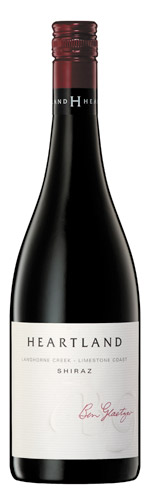
Heartland wines by Ben Glaetzer

Have you ever gotten together with your friends and done something exciting? Driven to Las Vegas, kayaked to SaltSpring Island, gone windsurfing in Mexico, started a winery...
   Started a winery?!
   Well that's Ben Glaetzer's idea of fun and he managed to wrangle together a posse of like-minded vinophiles such as Geoff Hardy, Grant Tillbrook and Scott Collett. These men are all leaders in their industry in Australia and their names inspire confidence.

   Geoff Hardy is a fifth generation winemaker in South Australia and his children are even now being groomed to take a more pivotal role in his operations. Grant Tillbrook is a number-crunching wizard whose list of consulting jobs in Australian wineries is staggering... wine-making may be an art-form, but without the right numbers to support it, wineries are incredibly expensive propositions. That leaves Scott Collett whose family has been working with wine in the McLaren Vale for 50 years and show no signs of stopping.
   An inspired group of individuals, but I've often heard it said that "too many chefs spoil the soup". In this instance, nothing could be further from the truth, and it must be due in part to it's captain: Ben Glaetzer.
    Ben literally grew up in the wine industry; Ben's uncle John Glaetzer was the second employee at Wolf Blass Winery (see my article on Wolf Blass at http://astudentofwine.blogspot.com/2011/09/wolf-blass-gold-series-shiraz-viognier.html). Ben's father Colin is a renown winemaker who won the prestigious Winemaker of the Year award in Australia. Even Ben's two brothers are winemakers. One could say that genetics came into play when Ben's received the Quantas award for young winemaker of the year in 2004 and was called a "brilliant winemaker" by Robert Parker Jr.
   So what does the award-winning winemaker do? He gathers a team of like-minded individuals and creates the Heartland brand of wines from South Australia (http://www.heartlandwines.com.au/) which still focus on quality, but with value being a high priority and not afraid to take a few risks in the vineyard.
   Great pricing, great quality, and all from one of the most innovative winemakers in Australia today! What else do you want? Well I for one want to be able to drink the wine right away - as opposed to Ben's ultra-premium Amon-Ra which deserves ample cellaring. Done. All of these wines drink superbly right away and right from the bottle - I didn't even need to decant.
   So what's the magical key to making wines like this: is it only due to the efforts of the massively gifted confederates? Much as some might like to say "yes", the truth is that terroir plays into the equation just as much (if not more) then anything else.
vineyards in Langhorne
   Heartland wines are grown on two distinct properties; in the Langhorne Creek and on the Limestone Coast. The Langhorne Creek is about 70km, or an hour's drive, south-east of Adelaide in South Australia... it's a beautiful place that has been producing wine longer then almost anywhere in this country. Settlers came here in the early 1800's and by the 1850's a wine industry was already bustling. The area is known for the cooling effects that the local lake Alexandrina has on climate, and has been recognized as a "cool-climate" viticulture region.


a stickleback tree on the Limestone Coast
   The Limestone Coast is almost 300km south-east from Adelaide and shares more in common with it's famous neighbour to the east: Coonawarra. The Limestone Coast soil has a high amount of oxidized iron in it's soil, creating what is known a terra rosa or red-soil. The region is also known as having very dry (even by Australian standards) summers which leads to stress on the vines... this stress is good stress, not like when your boss tells you that he's fired someone else in your department and left all of their work for you. This stress leads to reduced yields from the vines which means that there will be a greater concentration of flavors.
   So Ben, Geoff, Grant and Scott decide that they want to use their powers of oenology for good in the world and create unique, well-crafted wines for a reasonable price. How to accomplish this? They source out regions which don't have aren't as well-known yet so they can afford to sell the yields for modest fees. The results speak for themselves.
2009 Heartland Stickleback Red
 $18   *** Very Good Value ***

Varieties: Cabernet Sauvignon 45%, Shiraz 38%, Dolcetto 9%, Lagrein 8%
Region:    Langhorne Creek 67%, Limestone Coast 33%
Vinification: fermented on skins for 5 days before pressing.
                      Malolactic fermentation in 2 and 3 year old oak barrels
Maturation: 12 months in 2 to 3 year old; French and American oak
  • visual:   clear; fully intense plum/garnet core with slightest cherry rim
  • nose:   clean; moderate+ to fully intense developing aromas of red and black currant, red and black raspberry, blueberries, slightly spicy earthy terroir
  • palate:   clean; dry, moderate+ (red raspberry) acids, moderate+ (soft chalky) tannins, moderate body, moderate+ alcohol (14.5% ABV), moderate+ intense youthful flavors that mimick well all the red and under ripe berry notes.... the Shiraz makes its presence known with the spicy finish and the Langrein helps with the fresh acids. Very good balance, and structure, medium+ to long length
  • conclusion:   drinks well now but can cellar easily for until 2014. Will not develop appreciably
  • FOOD PAIRINGS:   crisp red wines need a bit of fat; pair this wine with a Grilled ribeye steak with kosher seasalt and smoked paprika rub

2009 Heartland Shiraz
$25   **** EXCELLENT VALUE ****
Varietal: 100% Shiraz
Region: Langhorne Creek 95%, Limestone Coast 5%
Soil: Langhorne Creek: Sandy Loam, Limestone Coast: Grey marl over deep limestone
Age of vines: 16-18 years
Vinification: crushed, then pumped over twice a day. Ten days skin contact. Extended maceration
Maturation:  14 months in new to 4 year old; 70% French, 30% American oak hogshead barrels
  • visual:   clear; moderate+ bruised plum/garnet core with slightest cherry rim
  • nose:   clean; moderate+ intense and developing aromas of red berries, spicy black licorice (no, really, that's what it smells like to me), dark espresso and chocolate notes
  • palate:   clean; dry, moderate+ (raspberry/currant) acids, moderate (soft, silky) tannins, moderate+ intense and youthful flavors mimicking well the nose with emphasis on red currant, red raspberry with the spicy finish known for Shiraz. Very good balance, excellent structure with long length
  • conclusion:   drinking well now, this wine will certainly reward cellaring for the next several years. Drink 2014-2018
  • FOOD PAIRINGS: a natural for lamb with it's lively acids, consider braised lamb shank with prosciutto-tomato and fresh sage reduction over parnsip and Yukon Gold potato mash

2009 Heartland Cabernet Sauvignon
$25    **** EXCELLENT VALUE ****
Varietal:  100% Cabernet Sauvignon
Region: Langhorne Creek 73%, Limestone Coast 27%
Soil: Langhorne Creek: Sandy Loam, Limestone Coast: Grey marl over deep limestone
Age of vines: 12-15 years
Vinification: crushed into 10 tonne open fermenters, and left on skins to cold macerate for three days prior to yeast inoculation. The wine was pressed to oak for malolactic fermentation, then racked and returned to oak
Maturation:   12 months 2 to 4 year old; 80% French 20% American oak
  • visual:   clear; fully intense garnet core with cherry rim
  • nose:   clean; fully intense developing aromas of blackberry, warm winter spice, light tobacco and cigar box, light eucalyptus or menthol notes
  • palate:   clean; dry, moderate+ (red raspberry) acids, moderate+ to fully intense (soft, chalky) tannins, moderate+ body, moderate+ alcohol (14.5% ABV), moderate+ intense and youthful flavors mimicking the nose once again with emphasis on the red berry notes and a lingering earthy background... the terra rosa shows through. Excellent balance and structure, long length
  • conclusion:   drinking well now, this wine also benefits from cellaring. Drink 2014 to 2018
  • FOOD PAIRINGS:   rich red wine with a bit of zippy acids? Consider a Butter poached beef tenderloin with slightly spicy roast garlic compound butter

Heartland wineries on the map


   And so I'm left at the end of a truly wonderful tasting asking the exact same question I did at the beginning. Which is mightier in winemaking: the winemaker or the terroir? Obviously the answer is more complicated then just black or white.. it's neither one nor the other. The truest joy in winemaking comes for the consumer when winemaker and terroir are working in unison as evidenced by the above.

   My joy these days is measured by the LittlestStudentOfWine, who gave her smiles of approval when she smelled each and every one of these wines. My smiles were not far behind...

As always, I look forward to your comments and questions.

CINCIN~!!!     SLAINTE~!!!     CHEERS~!!!

Sunday, May 15, 2011

Melange Noir, Mt. Boucherie estate winery

In a place where winemaking is a relatively new process, and most vineyards are keeping their history in years rather then decades or centuries, the Gidda family and Mt Boucherie estate winery are making their mark (http://www.mtboucheriewinery.com/) .

Mt Boucherie vineyard in West Kelowna
   1968 was the inaugural year that saw them growing grapes for winemaking and now, over 40 years later, brothers Nirmal and Kaldeep are continuing to grow the family passion to greater heights. Although their state-of-the-art facility for processing, fermenting and bottling wine is in West Kelowna, British Columbia, the family now has over 300 acres of vineyards in the West Kelowna area, Okanagan Falls and Similkameen Valley near the township of Cawston. All of their wines are made using 100% estate sourced grapes to ensure quality can be guarded as closely as possible.

location of Cawston, Similkameen Valley DVA
   Cawston has become a recently "hotbed" of viticulture activity and the Gidda family aren't the only ones sourcing new land there. Cawston has a population under 1000 and yet still has 2 fruit processing plants, the newer of which has been built solely for organic produce... the number of wineries and vineyard is growing by double digit percentages as well.

   And what are these new vineyards growing? Well in Westbank one of the grapes of choice is Michurinetz, which is an Eastern European varietal extremely well suited to cold climates; high in acid it is now blended successfully with a varietal like Merlot which will balance the acidity and give some plushness to the thin juice. Michurinetz is also capable of greatness when the vines reach maturity, but in their youth can produce wines that are thin and acerbic. Marechal Foch, a hybrid developed in the early 1900's, was named in honor of one of the French generals instrumental in the peace treaty ending the First World War. This varietal also is grown successfully in Westbank and the Similkameen owing to it's cold-weather hardiness and also lends a vibrant acidity to blends...

2005 Melange-Noir summit reserve, Mt. Boucherie estate winery
West Kelowna, Okanagan Valley DVA, British Columbia
$22 CAD   *** Very Good Value ***

varietals:         100% estate grown Marechal Foch, Michurinetz, Merlot and Gamay Noir. 14% ABV
fermentation:   cold soak, then 7 days warm ferment
maturation:     19 months new and used French oak
  • visual:   clear; fully intense purple-garnet with cherry-brick rim
  • nose:   clean; fully intense and developed aromas of blackberries, dried saskatoons, dark cocoa, black florals, black cherries and cherry blossoms, black raspberry compote
  • palate:   clean; dry, moderate+ (red/black currant) acids, moderate (green, grippy) tannins, moderate+ alcohol, moderate body, moderately intense and developed flavors of red and black currant, raspberry compote, blackberries, old leather, red and black cherries. Good balance, very good structure, medium length
  • conclusion:   drink now to 2013; will not develop further and is already losing concentration of flavor
  • PAIRINGS:   vibrant acids want some fat; I would use this for it's Gamay Noir and pair with boeuf bourguignon because the cream will balance the acids and the dried red berry flavors and aromas will love some red meat - consider using venison is you're daring and I think it will pay off~!

view from Mt Boucherie winery deck
   An interesting blend from an established BC winery, this was a unique experience. Paired with the right food I believe this wine can truly sing, but I would really like to come back and try it again when the vines have had a chance to develop further.

As always, I welcome your comments and questions.

CINCIN~!!!     SLAINTE~!!!     CHEERS~!!!