Showing posts with label dark chocolate. Show all posts

Monday, February 10, 2014

Valentine's Special

As I am a trained chef, I get a lot of people asking me for suggestions for what to serve their significant other on Valentine's Day.

Oh it's a dangerous thing to give advice~! And with this in particular, so much depends on personal taste and so I often say "Make them something you know they love." I mean, what's the point of grilling steak for a vegetarian??

With that out of the way, I love oysters. Absolutely love them. And what could me more classically Valentines then a little oyster-aphrodisiac appetizer? I've got a few easy ways to prepare them and some brilliant wines to pair that won't break the bank.

THE FOOD

Oysters Rockefeller
An utter classic, this recipe has been around for almost two centuries, and this is my adaptation of it. Not brave enough for raw oysters? Give this a try... I've even given this to "non-oyster" eaters who declared "Hey - this is actually pretty good!"

6 oysters on the half-shell, shells cleaned
1 cup    36% cream
1/2 cup sparkling wine
            cornstarch to thicken
1 Tbsp butter
1 cup blanched spinach
1/2 cup home-made bacon bits, cut large
6 large slices of medium-firm white cheese like: Jarlsberg/Gruyere/Fontina

  1. bring the cream just under a boil in a saute pan. Add the wine, whisk thoroughly, and as it returns to a low-boil add the butter and whisk again.
  2. add the oysters and poach 2 minutes, turning them as necessary to ensure even cooking
  3. place the spinach on the bottom of the oyster shells to provide a stable base and put the oysters on top of the spinach 
  4. thicken the poaching liquid with cornstarch and spoon a small amount of the sauce over
  5. place some bacon over the oysters, top with the cheese and place under the broiler in your oven under the cheese starts to brown (gratinée in French)

 WINE OF CHOICE:
Jaume Sera Cristalino Brut, $12.91 http://www.bcliquorstores.com/
Bold. Fresh citrus notes in this wine will cut through the dishes richness and bring it into focus. A keen mineral edge to the wine will harmonize perfectly with the mineral-tang of fresh oysters.
89 points

"Au Naturel"
Those who truly love oysters though, will adore fresh fresh oysters with nothing more then a bed of coarse sea-salt, a great glass of wine, and pleasant company. I know that restaurants are full of fresh oysters with "Mignonette" sauces, lemon, cocktail sauce, fresh horseradish, pickled daikon and the like. Infidels! Oyster connoisseurs around the world enjoy the fresh ocean-brine quality of great oysters and most of the above simply overpower these more subtle flavors. 


Of course, it's not for me to tell you that you can't or even shouldn't enjoy oysters with a condiment, but if you spend $2 per oyster for something that is only a mouthful, why wouldn't you want to savor the flavor??

WINE OF CHOICE: 
Jaume Sera Cristalino Rose, approximately $15 **specialty wine/liquor stores**
First-place finisher at the Whistler Cornucopia wine-festival, this was my choice for Top Sparkling Wine (under $50) for 2013. Worth the work to find, it's bright red berry tones of cranberry/raspberry/young strawberry will delight! Very approachable acids mean that it works well with slightly leaner seafood/fish dishes.
91+points


The Option
And if oysters just aren't your thing, and cooking is the last priority for Valentine's, then consider a plate of fresh fruit: your local grocer is bound to have some special goodies this week so (as I do) pile a plate with grapes, cut melon, ripe pear and garnish with a few long-stem strawberries (yes a real thing), maybe some blackberries or raspberries, a wedge or two of starfruit or mango and a little chocolate dipping sauce on the side.

WINE OF CHOICE: 
Riondo Prosecco, $14.93 http://www.bcliquorstores.com/
A decidedly feminine wine, small wonder this is the #1 sparkling wine of Italy! Ripe flavors of melon, tangerines and lemons are cut by mild yet zesty acids and an ultra-creamy mousse. Truly addictive you may want to purchase an extra bottle for mimosas the next morning and this will surely make your list of what to keep on-hand for romantic evenings or Monday nights watching "Castle"
90 points


So enjoy your Valentine's Day in your way, with some good food, great wine and even better company. Treat yourself, spoil someone else, and above all: savor the moment~!


As always, I look forward to your thoughts, comments and questions. Here, or:
on Twitter @AStudentofWine

Sunday, February 2, 2014

Ferreira 1991 LBV Porto (Port)

http://eng.sograpevinhos.eu

Legacy.
Every parent, from the moment they set eyes on their first child, yearns to leave a legacy. I don’t imagine that history would show anything else and I don’t imagine that the future will either. No, when I look at my daughter, I too feel the pull; the tug at my heart to create something that will stand-up to time.
porto and duoro
Dona Antonia Ferreira did just that. In the 1800′s, in a time when women weren’t allowed to vote and the “Rule of Thumb” meant a man could beat his wife with a stick as long as it wasn’t wider then his thumb (that’s a fact), this brave soul bucked traditional, reversed roles, and took the reins of her family business. She had been left a widow at age 33, had a young daughter to look in the eyes, and had a legacy already of four generations of family owned, family run wine in the Duoro region of Portugal.
Antonia took that legacy on a journey that has lasted centuries and shows every intention of lasting centuries more.
She built roads, cared for the workers, expanded vineyards, fought the dreaded phylloxera and traveled throughout Europe to find ways to save her crops. In short, Antonia lived for more then just herself. She came from money but her father had squandered much of the family fortune by the time Antonia took control of what became one of the most influential port houses in the world.
So she rebuilt it. To what extent?
Dona Antonia’s daughter, Maria, eventually became the  Countess de Azambuja. Amazing for a woman who could legally be beaten by her husband and had only the shakiest of legal principles to own her family business rather then see it go to an uncle or male cousin.
And the wine? As always my friends, the proof is in the glass:


1991 LBV

91+ points

  • visual:   clear; full intense garnet core, slight cherry rim
  • nose:   clean; medium+ to fully intense developing aromas of dried blueberry, stewed blackberries, fresh black raspberries and Saksatoons, woodsy tones, savory herbs and tomato leaf, dark tea
  • palate:   clean; sweet, medium+ crisp strawberry acid, medium+ chalky/chewy tannin, medium+ to full bodied, medium+ alcohol (20.5% ABV), fully intense developing flavors that are perfectly in-line with the aromas; bright red and black berry acids hit the palate full-speed and are followed by a plethora of herbaceous/floral tones… well-integrated oak follows with some dark cocoa notes. Very good balance, excellent structure and medium+ to long length; keeps developing up to 20 seconds
  • conclusion:   a joy to drink now, but can be cellared for decades. Enjoy 2013-2023++
  • FOOD PAIRING:   the high sugar level in this fortified wine cry out for balance! Consider then Roquefort infused croque-en-bouche with almond caramel, edible orchid garnish…. the savory tones of the cheese are a tried-and-true counterpart to Port’s naturally heavy fruit-induced sugar rush
porto-ferreira small labelLegacy.
Dona Antonia couldn’t have known how far her quest to ensure her daughter’s prosperity would take her family brand. The name Ferreira is synonymous with unwavering quality and brilliant value. The new head of the winemaking team, Luis Sottomayor, took up the mantle of command in 2003 and has since been nominated as the best winemaker in Portugal twice.
In December 2013, Ferreira port was also voted by Wine Spectator into the prestigious TOP 100 list for the year as well as receiving the highest scores per category for several of its fortified wines.
And what does all of this mean for you?
Value. Plain and simple. Here is a brilliant quality LBV (Late Bottle Vintage) which is considered to be inferior quality to a recognized Vintage Port. And yet, it has aged gracefully for 20 years and could have lived for many more had I the patience. It is not every port-house that can boast the same skill… under promise, over deliver – the creed of great business people the world over and obviously an unspoken mantra in the halls and on the slopes of Ferreira Porto.
As always, I look forward to your thoughts, comments and questions. Here, or:
on Twitter @AStudentofWine

Saturday, January 4, 2014

Ron Barcelo "Imperial" Dominican rum

http://www.ronbarceloimperial.com/english.html


When I read that the BTI (Beverage Tasting Institute) of Chicago has rated a rum 97 points not once, but twice, then I take notice. You see, 97 points is the highest score they have ever given a rum.
So I do some digging, find out that they guys at Ron Barcelo have accumulated a succession of medals that would make any distiller dizzy with pride: 10 gold medals, a double-gold medal in Miami where it was also voted "Best in Class". The list goes on... pretty good legacy for the company that Julian Barceló started in 1929 when he emigrated to the Dominican Republic from Spain.
rum Ron  Barcelo barrels
The company grew out of a vision of quality, quality, quality. So much so that even the locals ditched their hither-to favorite libations in deference to the Barcelo brand. Time passed and the natural progression of a company with strong vision and the support of the community: Barcelo rum became the most popular brand in the country! Impressive! But there's always room to grow, right?
In 1980, Miguel Barcelo (?grandson to Julian?) created the new icon: "Imperial" label. A testament to the family/company values, only the best would do and the company invested heavily in their infrastructure: from the sugarcane plantations to the molasses refinery to the labs to the aging cellar. Quality because more then a catch-phrase for the Ron Barcelo company (Barcelo Export Import S.R.L.), it became the Prime Directive.
The led to great accomplishments: the company earning the first ISO 9001:2000 Certification in the Dominican Republic spirit industry and the second in all of the Caribbean, international expansion to 10 countries in the 1990s,  the company winning a team of highly skilled, highly motivated Spanish rum professionals and by 2010 a distribution plan the extends to over 50 countries world-wide.
The massively accelerated growth can be directly linked to that 97-points I started talking about: it's the octane in the Barcelo fuel. But obviously grandson Miguel would never have been able to push such dramatic expansion without the leg-work of grandfather Julian. When a company starts with such a determined vision or goal then anything is possible.
My one challenge with the Barcelo company propaganda is that they state the "Imperial" is made in "limited quantities to maintain its mystique... its uniqueness". The Barcelo company is immense, employing many thousands of people, and exporting its own ocean of distillate to over 50 countries. To a country-lad such as myself, this doesn't seem much like "limited production". That being said, the spirit is quite good, so let's move straight to the tasting-notes:

"Imperial"rum Ron Barcelo Imperial

no age given: research shows from 6 to 10 years, but flexible depending on the year

91 points

$42+ CAD (Quebec)
$35+ US (Washington)
  • TO THE EYE: a pretty rum, it shows so well in the glass with it's dark coppery hued amber tones
  • ON THE NOSE: it displays rich, unique salt-water toffee, young pineapple and mild Szechuan pepper aromas
  • ON THE PALATE: is where the score starts to dip for me: clean flavors of dark toffee, coffee and warm wood-tones are reminiscent of great Bourbon (positive) but some of the spirit in the blend is a tad juvenile/rough and clumsy and burns (negative). The structure is quite good, but not all of the flavors truly seem to marry together and this particular vintage seems to have some bits and pieces sticking out on their own. Well made but perhaps benefiting from further maturation.
  • How to serve it? Too good as a blender with cola or fruit-punch, too much ice will also dampen the more subtle aromas and leave it somewhat mono-dimensional. I found that room temperature, with a splash of water allowed it to open more in the nose and left the palate in better balance.

So a good little sipping rum, from a company with a strong history of over-delivering. Just the type of company I like to support! This rum is a great gift for you celiacs out there who find yourselves missing a splash of Bourbon or Kentucky whiskey... similar flavors and will do in a pinch on your veranda one lazy afternoon. 
rum Ron Barcelo pouring into glasses
As always, I look forward to your thoughts, comments and questions. Here, or:
on Twitter @AStudentofWine


on Facebook @www.facebook.com/TheChefandTheGrape

Wednesday, July 10, 2013

Schug Pinot Noir, Carneros, Sonoma Coast, California

www.CrushImports.com (merchants in Western Canada)

If you don't know who Walter Schug is, then you my friend need to learn one more name today. Herr Schug is, to me and many others, a veritable pantheon in the wine industry, in American wine, and in the nonsensical world of Pinot Noir.

Walter Schug was born with his feet stained red from the grapes... at least, that's what he told me at the 2013 Vancouver International Wine Festival (http://vanwinefest.ca). You see, Walter's Dad was also in the wine industry and used to take young Walter, when he was very, very young - to the vineyards and into the cellar. Walter told me, with his infectious grin, that they were some of his absolute fondest memories. And Walter has lead quite a life~!

How do I begin to tell the story of this man? Do I start with "Insignia"; the inaugural, iconic Bordeaux-styled blend that set the bar - - - and set it higher then most have been able to reach since? Do I start with Syrah?? Walter was the first winemaker to work with it in the USA. Do I start with late-harvest techniques? Once again - trailblazer. Perhaps you're expecting me to start to tell Walter's story by saying that this year marks his 60th vintage as a winemaker.

You would be wrong.

Of all of the things that there are to respect and admire about Walter Schug, perhaps the greatest- (asides from his steadfast devotion to his childhood grape varietal Pinot Noir which was quite out of fashion during the 80's)- yes the greatest characteristic I admire is his commitment to family. Walter has built everything that we see; built reputation, collaborated to create a community,  crafted a winery from a modest 2,000 cases/year to over 30,000 cases - for family.

Daughter, daughters' twin, son, daughter-in-law... all working in the family business. I come from a big family and I know that families don't always see eye-to-eye, and yet all three children work in the winery. How can this be?

Well just as I said in my last article, I believe in Reaganomics; I believe in trickle-down-theory. Someone at the top in this company (not saying who) must have laid down a foundation of respect, acceptance and even - love. Love? "You must be thinking ardor or passion" I hear you thinking. But, you would be wrong. For I mean love.

Walter crossed from Germany to California in 1961, and he came with his wife Gertrud. His blushing-bride also had a wine-maker as a father and so she knew the lifestyle she was getting herself into... crossing the ocean to the (then) unknown wilderness of central California. There were less then 50 wineries in the entire state at the time. Now there are over 450 in Sonoma County and 700 in Napa Valley. Gertrud came for love.

And it is an Old-Fashioned kind-of-love that lets a husband and wife work together as well as live together. Gertrud became Chief Financial Officer for Schug Wines in 1980 and remained in that onerous position until she passed away in 2007. She and her husband were willing slaves to the promise that they were building something for their children (and now grand-children).

I was reminded of my mentor/inspiration James Conaway (New York Times best-selling author @ http://cjonwine.blogspot.ca/) when I read about Walter and Gertrud packing their 3 kids into the car and moving to the rural community (at the time) of St Helena, Napa Valley in 1966... The Judgement of Paris was still a decade away, Chateau Montelena and Stag's Leap Wines? Kids just learning to walk... and this was where Walter wanted to bring his kids. This was where he wanted to build their future.

And why? Yes, for love. But also, in Walter's words

“It was the great potential I saw here, and the opportunity to be part of its development, that convinced me to come to California.”

Bravo my friend. Your wines speak for themselves;

2009 Carneros Pinot Noir
92+ Points
$30 USD, winery club price $24 USD
  • visual:   clear; medium ruby core with slightly bricking wide and light ruby/cherry rim
  • nose:   clean; medium+ to fully intense and youthful bouquet of red cherries and raspberries, cherry blossoms, wild herbs such as thyme/sage/savory, a little forest aroma (French call this sous-bois), dark tea notes and a hint of menthol/eucalyptus
  • palate:   clean; dry, medium+ crisp red currant acid, medium+ chewy tannin, medium- body, medium+ alcohol (14% ABV), medium+ intense youthful flavors that are much in-line with the aromas; a bright red burst of young berry flavors is carried by waves of savory herbs, dense wood tones and a strong presence of dark tea minerality. Before today I have never paired tea with mineral, but in this instance the two flavors are nigh congruent and to me deserve to be spoken of as a pair. Excellent balance and structure, medium+ length
  • conclusion: to be enjoyed now. This is a (in my opinion) an excellent expression of Carneros and is just hitting its prime; enjoy 2013-2018
  • FOOD PAIRING:   the presence of wild herbs and sous-bois in the wine really make me want to pair this with Pork; slow roast bacon wrapped pork loin with maple-mustard glaze, sweet potato pave, fresh English peas... the pork is a natural for Pinot Noir, the sweet of the maple balances slightly hot alcohol, the mustard cuts through it, the sweet potato enhances natural fruit flavors and the bright green notes of the peas play counter-part to the savory/herbaceous qualities

2010 Sonoma Coast Pinot Noir
93+ Points 
$24 USD, winery-club price $19.20 USD
  • visual:   clear; light ruby core fading quickly to lighter ruby/cherry rim, no bricking
  • nose:   clean; fully intense youthful spicy savory herb bouquet; every herb under the sun~! Thyme, rosemary, Italian parsley, sage, savory... a kaleidoscope mixed with musky wood tones like sandalwood, the minerality is a delicate thread of spun steel that threads throughout
  • palate:   clean; dry, full red currant acid, medium grippy tannin, medium- body, medium alcohol (13.5%), medium+ to fully intense youthful flavors perfectly in-line with the aromas; the quick burst of red berry tones quickly gives way to a rich abundance of savory herbs and musky wood tones... the minerality which seemed delicate in the nose shows it's full force here and is finessed as much as it is puissant. Excellent balance and Stunning structure, medium+ to long length
  • conclusion:   still a babe; drink now once through the aerator or a 30-minute decant. Enjoy 2015-2020++
  • FOOD PAIRING:   be big, be bold, because this wine most certainly is as well~! Consider an authentic lamb/venison Poblano mole over Manitoba wild rice pilaf, Chiliwack corn succotash, steamed collard greens (Swiss Chard)... you  might never have thought of Pinot Noir and chocolate (and neither did I for a long time), but in some instances.... Magic!!!
Schug Carneros vineyards
Wine is more then passion, it is more then devotion, it is even more then love. Wine is also business.

And Walter Schug knows that as well, if not better, then anyone. Walter took years - literally years - to discover the place that was going to be best for him to work with the grapes that his father had introduced  him to when he was a child in Germany. Pinot Noir; the heart-break grape. It is his passion, even if it was Chardonnay that paid the bills for many of those first years of the winery.

Walter knew he had found the place at last when he came to the Carneros appellation, just south of the town of Sonoma. It's a place where the fog is replaced at midday by summertime winds that come rushing through  the Petaluma Gap. It's this wind-stress that causes the skin of the grapes to thicken, particularly the higher Pinot Noir plantings, a characteristic that adds pepper and spice nuances to the wine. Perhaps it also toughens the skins of its inhabitants, allowing them to work side by side with family which must be a stress all of it's own... yes, the wind comes and does this all so that you and I get to taste this World-Class wine for pennies, and the Schug family gets to keep building a future. Together.

As always, I welcome your comments here or on Twitter @ AStudentofWine

CINCIN~!!!    SLAINTE~!!!     CHEERS~!!!

Sunday, March 18, 2012

Fonseca Terra Prima Porto

Someone recently asked me what the real difference between winemaking and organic winemaking is. In simplest terms, all farmers need to fertilize their crops; whether it be grapes or corn.... organic farmers won't use artificial fertilizers, they use natural fertilizers (and preferably produced on or very close to their own farm).

   And what does this do for the wine we ask? Well nothing really. Nothing you say? But that's the point I say~! Artificial fertilizers use non-organic compounds, they rely on man-made chemistry to do the work of Mother Nature. These compounds leech into the soil, and thus into the food (grapes) and thus into the wine; changing  the wine.

   Organic practices also severely limit the amount of sulphites allowed, which is of vital importance for those of you who find red wines in particular give you a bit of skin flush, headache or a sore tummy. Yes, the sulphites are still there: it's a natural part of the winemaking process. But! But it is severely limited and you should be able to consume organic wines with limited reaction or no reaction at all.

   The patriarch of the port community, Fonseca Guimaraens (http://www.fonseca.pt/) is the first winery in the Douro region of Portugal to adopt certified organic practices for it's port production from start to finish. This includes the aguardente (similar to brandy) that is used to fortify the red wine. And why would House Fonseca make this bold move, years before anyone else in the region is ready to do so?

   Because they are innovators.

David Guimaraens
   (read a recent article of mine of port production if you wish to learn more about the Douro region: http://astudentofwine.blogspot.ca/2012/01/porto-hutcheson-colheita-1999.html

   Even though Fonseca Guimaraens has been in continuous operation since 1822, 6th generation family winemaker David has launched into the unknown not just with organic principles, but also through technology. Fonseca recently showcased their newest addition to the staff, a device of their own invention: a piston-paddle vat known as "Port-Toes". It has been created with the purpose of more efficient temperature control  during fermentation thus allowing for a gentler touch with greater results.

   And the results? As always my friends... in the glass.

Fonseca Porto Terra Prima n/v
  • visual:   clear; fully intense inky purple core with slight cherry rim, no bricking
  • nose:   clean; moderate+ to fully intense and developing aromas of ripe red cherries, succulent plums, blackberries, dark chocolate and warm earth
  • palate:  clean; sweet, fully intense (red and black cherry) acids, moderate+ (well integrated and soft) tannins, moderate+ body, moderate+ABV(20%), fully intense and youthful flavors relying heavily on fresh red berries and light floral notes to make a heavy impact. Moderate structure and very good to excellent balance with only medium length
  • conclusion:  the youth of the vines is apparent. Whilst there are rich flavors, they are somewhat monotonous, however the finesse of the structure leads me to believe that future vintages will rival some of the truly great ports of the world. Drink now, holds to 2017.
  • FOOD PAIRINGS:   with wines of this sweetness, it's a bit of folly to pair with anything even close to the same sweetness. Consider a Savory dark chocolate torte with lemon whip cream and stewed plums

the "Port-Toes"
   And so a bit of a dichotomy; House Fonseca. Almost two centuries old, they utilize state of the art facilities and "ahead-of-the-curve" techniques in the vineyard to create purist flavors with sublime structure. I can only imagine that Manuel Pedro Guimaraens, the man who bought controlling interest in the  Fonseca & Monteiro Company in 1822 and started this port house which is all about family, is looking down and watching this new generation with pride.


                As always, I welcome your comments and questions.


CINCIN~!!!     SLAINTE~!!!   CHEERS~!!!

Tuesday, January 31, 2012

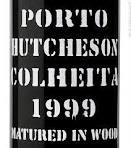
Porto Hutcheson, Colheita 1999

What is port, Porto or "port-styled wine"? Simply put, Porto is a fortified red wine coming from the Duoro region of Portugal.

   Starting with the red part, Porto wines are usually a blend of the native varietals, of which there are literally hundreds. The wine laws are very old in the Duoro; in fact the Duoro is the oldest protected wine region in the world having had laws passed in 1756 to safeguard it's wines authenticity. And so, back in the day, perhaps there were winemakers dabbling in any of the hundreds of applicable varietals but these days the dominant ones are  Tinta Barroca, Tinta Cão, Tinta Roriz (a.k.a. Tempranillo in Spain), Touriga Francesa, and Touriga Nacional.

   And what do I mean by fortified? Well as I said, the Duoro has some very old laws and several of these laws limit the quantity of Porto that can be produced in any given year. What does a port-producer do with the rest of the wine? Well some of it will be kept or sold as table wine (such as the famous Quinta de Crasto) but much of it will be distilled down to a local liqueur known as Aguardente. This is moonshine, in the most beautiful way. As it comes from the wine that it goes to fortify, the flavors will marry wonderfully but the real joy in adding the liqueur is that it stops the fermentation of the wine, leaving behind any residual sugar to remain as sugar.... acidic and playful tawny ports or sugary sweet candied ruby ports, it is the Aguardente that makes the wine what it becomes.

  And so what of the Duoro? The Duoro is the name for both the wine-region and the massive river that carves it's way through northern Portugal. The wine gets produced in the wine-region which is inland from the coastal city of Porto and, back in the day, could only be transported down the mighty river by boat. Hence the fortified wine had to travel through Porto hence the name we give it.

   And if you're wondering why the Portuguese couldn't ship the wine by anything other then the river? It's the canyon walls.... hundreds of miles of steep gorges hundreds of feet deep and in the 1700's and 1800's a daunting journey, especially compared with the relative calm of the river.


   So what of Porto Hutcheson? In relative terms, Hutcheson is a new-comer; having been brought into the world in 1913 by Manuel de Almeida (http://www.porto-barros.pt/client/skins/english/site.htm). Manuel was a winemaker, yes indeed, but it seems to me that he was a businessman as well (perhaps above and beyond all else). Over the course of his career Manuel succeeded in not only opening Hutcheson, but keeping it open through 2 World Wars and a Great Depression. His grandson Manuel has succeeded and Hutcheson is still a family owned and operated endeavour.

1999 Porto Hutcheson Colheita
$35-40 USD    *** Very Good Value ***
  • visual:   clear with trace sediment; light ruby core with substantial orange-brick rim
  • nose:   clean; fully intense and developing aromas of candied orange peel, light caramel, dates and figs, cranberry, raspberry juice, woodsy notes and a touch of clove finish
  • palate:   clean; sweet, fully intense (pomegranate) acids, full alcohol, medium body, medium (soft, chalky) tannins, moderate+ intense and youthful flavors with emphasis on red berry notes to start; cranberry, young raspberry, fresh strawberry, pomegranate followed by savory earthy flavors, wood notes and citrus peel. Very good balance, good structure and medium length
  • conclusion: this wine has probably peaked, but will hold for several years. Drink now to 2020
  • FOOD PAIRING:   Vivid acids and high sugar levels can be a challenge; you will want to use some dairy to balance the acidity but keep your sweetness in the dessert to a minimum or risk making the port seem off-balance. Consider: dark chocolate torte with olive oil and balsamic vinegar, chevre ice-cream and star anise stewed plums

   Manuel de Almeida was an impressive businessman: opening his own business and keeping it thriving through nearly insurmountable odds. No, he didn't just keep it running, he grew it... I often worry about what is or is not possible in this time of economic uncertainty, and yet the Universe keeps showing me examples of what IS.

   More then we can ever hope for or imagine...  and I can imagine alot~!

As always, I look forward to your comments and questions.

CINCIN~!!!     SLAINTE~!!!     CHEERS~!!!