Showing posts with label Portugal. Show all posts

Sunday, February 2, 2014

Ferreira 1991 LBV Porto (Port)

http://eng.sograpevinhos.eu

Legacy.
Every parent, from the moment they set eyes on their first child, yearns to leave a legacy. I don’t imagine that history would show anything else and I don’t imagine that the future will either. No, when I look at my daughter, I too feel the pull; the tug at my heart to create something that will stand-up to time.
porto and duoro
Dona Antonia Ferreira did just that. In the 1800′s, in a time when women weren’t allowed to vote and the “Rule of Thumb” meant a man could beat his wife with a stick as long as it wasn’t wider then his thumb (that’s a fact), this brave soul bucked traditional, reversed roles, and took the reins of her family business. She had been left a widow at age 33, had a young daughter to look in the eyes, and had a legacy already of four generations of family owned, family run wine in the Duoro region of Portugal.
Antonia took that legacy on a journey that has lasted centuries and shows every intention of lasting centuries more.
She built roads, cared for the workers, expanded vineyards, fought the dreaded phylloxera and traveled throughout Europe to find ways to save her crops. In short, Antonia lived for more then just herself. She came from money but her father had squandered much of the family fortune by the time Antonia took control of what became one of the most influential port houses in the world.
So she rebuilt it. To what extent?
Dona Antonia’s daughter, Maria, eventually became the  Countess de Azambuja. Amazing for a woman who could legally be beaten by her husband and had only the shakiest of legal principles to own her family business rather then see it go to an uncle or male cousin.
And the wine? As always my friends, the proof is in the glass:


1991 LBV

91+ points

  • visual:   clear; full intense garnet core, slight cherry rim
  • nose:   clean; medium+ to fully intense developing aromas of dried blueberry, stewed blackberries, fresh black raspberries and Saksatoons, woodsy tones, savory herbs and tomato leaf, dark tea
  • palate:   clean; sweet, medium+ crisp strawberry acid, medium+ chalky/chewy tannin, medium+ to full bodied, medium+ alcohol (20.5% ABV), fully intense developing flavors that are perfectly in-line with the aromas; bright red and black berry acids hit the palate full-speed and are followed by a plethora of herbaceous/floral tones… well-integrated oak follows with some dark cocoa notes. Very good balance, excellent structure and medium+ to long length; keeps developing up to 20 seconds
  • conclusion:   a joy to drink now, but can be cellared for decades. Enjoy 2013-2023++
  • FOOD PAIRING:   the high sugar level in this fortified wine cry out for balance! Consider then Roquefort infused croque-en-bouche with almond caramel, edible orchid garnish…. the savory tones of the cheese are a tried-and-true counterpart to Port’s naturally heavy fruit-induced sugar rush
porto-ferreira small labelLegacy.
Dona Antonia couldn’t have known how far her quest to ensure her daughter’s prosperity would take her family brand. The name Ferreira is synonymous with unwavering quality and brilliant value. The new head of the winemaking team, Luis Sottomayor, took up the mantle of command in 2003 and has since been nominated as the best winemaker in Portugal twice.
In December 2013, Ferreira port was also voted by Wine Spectator into the prestigious TOP 100 list for the year as well as receiving the highest scores per category for several of its fortified wines.
And what does all of this mean for you?
Value. Plain and simple. Here is a brilliant quality LBV (Late Bottle Vintage) which is considered to be inferior quality to a recognized Vintage Port. And yet, it has aged gracefully for 20 years and could have lived for many more had I the patience. It is not every port-house that can boast the same skill… under promise, over deliver – the creed of great business people the world over and obviously an unspoken mantra in the halls and on the slopes of Ferreira Porto.
As always, I look forward to your thoughts, comments and questions. Here, or:
on Twitter @AStudentofWine

Tuesday, January 31, 2012

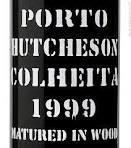
Porto Hutcheson, Colheita 1999

What is port, Porto or "port-styled wine"? Simply put, Porto is a fortified red wine coming from the Duoro region of Portugal.

   Starting with the red part, Porto wines are usually a blend of the native varietals, of which there are literally hundreds. The wine laws are very old in the Duoro; in fact the Duoro is the oldest protected wine region in the world having had laws passed in 1756 to safeguard it's wines authenticity. And so, back in the day, perhaps there were winemakers dabbling in any of the hundreds of applicable varietals but these days the dominant ones are  Tinta Barroca, Tinta Cão, Tinta Roriz (a.k.a. Tempranillo in Spain), Touriga Francesa, and Touriga Nacional.

   And what do I mean by fortified? Well as I said, the Duoro has some very old laws and several of these laws limit the quantity of Porto that can be produced in any given year. What does a port-producer do with the rest of the wine? Well some of it will be kept or sold as table wine (such as the famous Quinta de Crasto) but much of it will be distilled down to a local liqueur known as Aguardente. This is moonshine, in the most beautiful way. As it comes from the wine that it goes to fortify, the flavors will marry wonderfully but the real joy in adding the liqueur is that it stops the fermentation of the wine, leaving behind any residual sugar to remain as sugar.... acidic and playful tawny ports or sugary sweet candied ruby ports, it is the Aguardente that makes the wine what it becomes.

  And so what of the Duoro? The Duoro is the name for both the wine-region and the massive river that carves it's way through northern Portugal. The wine gets produced in the wine-region which is inland from the coastal city of Porto and, back in the day, could only be transported down the mighty river by boat. Hence the fortified wine had to travel through Porto hence the name we give it.

   And if you're wondering why the Portuguese couldn't ship the wine by anything other then the river? It's the canyon walls.... hundreds of miles of steep gorges hundreds of feet deep and in the 1700's and 1800's a daunting journey, especially compared with the relative calm of the river.


   So what of Porto Hutcheson? In relative terms, Hutcheson is a new-comer; having been brought into the world in 1913 by Manuel de Almeida (http://www.porto-barros.pt/client/skins/english/site.htm). Manuel was a winemaker, yes indeed, but it seems to me that he was a businessman as well (perhaps above and beyond all else). Over the course of his career Manuel succeeded in not only opening Hutcheson, but keeping it open through 2 World Wars and a Great Depression. His grandson Manuel has succeeded and Hutcheson is still a family owned and operated endeavour.

1999 Porto Hutcheson Colheita
$35-40 USD    *** Very Good Value ***
  • visual:   clear with trace sediment; light ruby core with substantial orange-brick rim
  • nose:   clean; fully intense and developing aromas of candied orange peel, light caramel, dates and figs, cranberry, raspberry juice, woodsy notes and a touch of clove finish
  • palate:   clean; sweet, fully intense (pomegranate) acids, full alcohol, medium body, medium (soft, chalky) tannins, moderate+ intense and youthful flavors with emphasis on red berry notes to start; cranberry, young raspberry, fresh strawberry, pomegranate followed by savory earthy flavors, wood notes and citrus peel. Very good balance, good structure and medium length
  • conclusion: this wine has probably peaked, but will hold for several years. Drink now to 2020
  • FOOD PAIRING:   Vivid acids and high sugar levels can be a challenge; you will want to use some dairy to balance the acidity but keep your sweetness in the dessert to a minimum or risk making the port seem off-balance. Consider: dark chocolate torte with olive oil and balsamic vinegar, chevre ice-cream and star anise stewed plums

   Manuel de Almeida was an impressive businessman: opening his own business and keeping it thriving through nearly insurmountable odds. No, he didn't just keep it running, he grew it... I often worry about what is or is not possible in this time of economic uncertainty, and yet the Universe keeps showing me examples of what IS.

   More then we can ever hope for or imagine...  and I can imagine alot~!

As always, I look forward to your comments and questions.

CINCIN~!!!     SLAINTE~!!!     CHEERS~!!!

Tuesday, February 1, 2011

Vinha do Monte, Vinho Regional Alentejano, Portugal


The cartoon to the left is simply titled "Suicide Alentejano (style)"... any winemaker or farmer will instantly see the humor.

     I am not a farmer, but am really only one generation removed, and whilst I can see the humor - I can also see the poignancy. What a struggle for that man, I think, and what passion. For what else, really, could motivate someone to work so diligently for what appears to be a "more then trying" situation? What else other then passion?

     I don't think I've ever heard anyone claim the Portuguese lacked for passion. Common sense? That may or may not be a different matter, which is also inferred from the cartoon. But then, what winemaker ever really followed sense above passion? What farmer? Common sense tells us that slaving all year to one's land is a risky endeavour at best; pests, natural disasters, drought, flood... so many things to get between the farmer and his crop. The farmer may even do everything right, in the right year, with the right weather - and it doesn't work the way he wanted it to. Just because.

     Common sense would tell me not to invest so much of myself in that endeavour.

     But farming, in any of its forms, really is about passion I believe, and that belief is re-affirmed every time I hear a winemaker speak of why he/she is in this craft: "To know that someone, somewhere, is sharing a bottle of my wine with friends or family, and smiling". Of course, I'm using my own words, but the meaning is there.

     Vinha do Monte, Vinho regional Alentejano comes from one of the largest areas of Portugal... it encompasses about 1/3 of the country though less then 8% of the population, and dwindling. It is a rural place, and having been born on the edge of rural - I understand why people  have left: people leave to find jobs. The sad part then, is many of the jobs that are there never get filled when the one person who does it for the town or county retires. And then a skill becomes forgotten. Cork production is an incredibly vital part of Alentejo's economy, and cork is harvested manually.

     Yes, by hand, and that will most likely never change. Did you know that one cork tree can produce enough bark in a harvest to create over 4000 corks? Pretty cool stuff. That was before I found out that they actually still make the axes for harvest in Alentejo as well. Makes sense-  who would know better what they need?

      The region spreads from the hills bordering Spain to the NorthEast down to the ocean... it is a vast sprawl of rolling hills with little rainfall. Summer reaches daytime highs of 40C or higher, and winters are generally mild. All in all, a wonderful place to grow crops of any kind, and wine drinkers the world over are taking notice.

2008 Vinha do Monte
Vinho Regional Alentejano, by Herdade do Peso
(a Vinho Regional is Portugal's version of the Country Wine classification)
12.5% ABV, $14   **Very Good Value**
traditional Alentejo white vine varieties -Roupeiro, Antão Vaz and Arinto
  • visual:     clean; pale yellow straw core with slight watery rim
  • nose:     clean; moderate+ intense youthful aromas of exotic fruit (pineapple, candied banana, ripe melon), wild grasses, gravelly/flinty minerality
  • palate:     clean; dry, moderate+to full (lemon and lime) acids, moderate body, moderate+ alcohol, moderately intense youthful flavors of flinty minerality, wild grasses, lemon and lime zest, slight exotic fruit undertones. Moderately well balanced, moderate structure and a quick finish.
  • conclusion:   This is a very refreshing wine, made as they say, to whet one's whistle. As an appero or a drink before the meal I think this would excel with its bright and lively acidity. Drink it now, as it will not improve with age and I don't imagine it has much more life. Enjoy 2011-2012.
  • PAIRINGS:   An excellent match for white fish and light cream sauces, Spanish ham crisps topped with goats cheese, also steamed green vegetables!

Sogrape Vinhos (the parent company) has just been distinguished by the well-known American magazine, Wine Enthusiast, with the trophy for “European Producer of the Year”. Congratulations! I look forward to sampling more of your portfolio if this is the quality one can expect for under $15!

CIN-CIN~!!!   SLAINTE~!!!   CHEERS~!!!

Tuesday, January 25, 2011

Vinha do Alqueve, Vinho Regional Ribatejano, Portugal


Well, I've always said that I'm just a "student-of-wine" and so then it is to be expected that I have a great many questions.


Pinhal da Torre, Portugal
     Today I am studying the wines of Portugal, and not the fortified type. Not that I don't love a great fortified wine (as many know I do), but because there is so much more to the wine-story of Portugal now and I want to learn!

     Touriga Nacional must be the first grape I learned about from Portugal: a grape that people have compared to Cabernet Sauvignon in that it has depth, tannin and structure, but usually needs something else to sort of "fill-out" the flavor profile. I've seen it married with Merlot, Syrah, Cabernet Franc, and many others (Portuguese varietals of course). Here is where the question comes in...

     The wine in question today is the Vinha do Alqueve from Pinhal da Torre in the region of Ribetejano, Portugal ( http://www.pinhaldatoree.com/ ). This winery does all sorts of things to maximise quality; they hand-pick their grapes, pick their grapes early in the morning before the heat has a chance to diminish the quality of the picked fruit, etc. Why then, do you imagine, they would leave the stems on the grapes whilst in primary fermentation? To increase tannins I would naturally answer, but then, why do that for a grape that is already high in tannins? Unless that's just because that is how they enjoy that wine in that region. Could be.

     In any case, I was at my local BCLDB (BC Liquor Store) and inquired about Portuguese wines and this was what I got steered onto.

2006 Vinha do Alqueve, Pinhal da Torre
Ribatejano, Portugal
13% ABV, $10.99    **EXCELLENT VALUE**
varietals: Trincadeira, Tinta Roriz, Touriga Nacional, Cabernet Sauvignon, Touriga Franca


  • visual:     clean; deep garnet core with slight cherry rim
  • nose:     clean; moderate+ intense and developed aromas; leathery oak, deep bruised plums, slightly jammy blackberries, mineral terroir, white pepper spice, cherry blossoms throughout
  • palate:     clean; dry, moderate++ (red currant) acids, moderate+ (soft, slightly grippy) tannins, moderate body, moderate+ ABV, moderately intense and developed flavors mimicking the nose; French oak comes out first, followed by red currants, red and black raspberries, slightly jammy blackberries, backbone of meatiness. Moderate body, moderate+ to fully developed structure, full length on the palate (for the price)
  • conclusion:   This wine completely over-delivers. For $11 in BC I get a wine and I just hope its balanced - nothing else. This wine has length, balance, structure, nuances... if I was charged $20 I would still say that it was a Very Good Value. However, drink now - this wine doesn't have long left in it.
  • PAIRINGS:   Strong acids mean it can be paired with some fattier foods like cheese, richer sausages, pate... strong tannins mean fuller flavored cuts of meat. I would pair this with cured meats and cheese, fresh bread. The alcohol is in check so feel free to use a bit of spice as well, and the spice will enhance many notes in the wine

     Great wines being produced on the other side of the world for $11... simply marvellous! It makes me more then a little curious to taste their $40 wines. Colleagues tell me that the value-for-money never changes, and that Portugal is really out-doing itself these days... reshaping how we view their wine making skills.

CIN-CIN~!!!   SLAINTE~!!!   CHEERS~!!!

Wednesday, November 17, 2010

Kirkland 10-year Tawny Port. No, really.

Fonseca Guimaraens ( http://www.fonseca.pt/ ), one of the oldest and most prestigious producers of Vinho do Porto (Port  wine) in the world.

COSTCO, one of the biggest producers of inexpensive bulk items in the world.

How, one may ask, could the two of these meet in the middle? The answer lies within a bottle of 10-year Tawny Port made by the former, and sold by the latter. And what exactly is Tawny Port?

    
     It is fortified wine, made in the Douro region of Portugal, fortified by the addition of a spirit known as aguardente which is a native product of Portugal. Tawny Port is also aged in wooden barrels using the Solera system, just as in Sherry production in Spain. For this, I am at this moment eternally grateful, as I believe it gives much to the wine that may otherwise be somewhat lacklustre.

     I realize that many of you are still shaking your heads at the notion of COSTCO brand Port, but read on dear friends and colleagues. This is the same company we buy our eggs and cheese from, our tissue paper and short-sleeve shirts, even our gas. They've always done a solid job with everything else, right? Right. Otherwise we would have taken our hard-earned money elsewhere by now. So why not put away the snobby-hat and give COSTCO brand Port a chance?


Kirkland 10-year Tawny Port, NV  Douro Region, Portugal
$17 USD, 20% ABV, Very Good Value
  • visual:    moderately intense caramel centre, light cherry/brick rim
  • nose:     moderately intense aromas, mostly sugary sweetness, some stonefruit especially cherry, old raisins, light leathery notes, vanilla, touch of cedar
  • palate:   moderate+ acids, moderate tannins, moderate+ intense flavors once again focused mainly on sugar. That being said, there are layers under the sugar that mimik the nose well. Moderate+ body from the sugar levels, decent structure with a slightly bitter aftertaste & noticeable alcohol.
  • PAIRS WITH:   this, to me, is a beginners Port. If you have never tried Port before, this will go down quite smoothly and will leave a fairly nice aftertaste, especially for the price. Try it with Gorgonzola cheese, spicy candied walnuts & toasted anise bread & I think you'll find it more then adequate after a meal.
     Please understand, I'm not trying to subjugate anyone to the will of Mass Business. Quite the opposite. However, I feel it only right and proper to try and display the facts as I see them and not be swayed in either direction from a label. We can find greatness in the most unexpected places!


     This is not a great Port, but for a Canadian, it is a very reasonable product for the price. I would, and will, purchase this again, and feel very comfortable having a sip any old time... as opposed to a Colheita 1951  from Fonseca, which I would horde and feel a little guilty every time I walked past the dreadfully expensive bottle, but that's another story!

CINCIN !!   SLAINTE !!   CHEERS !!

Sunday, April 18, 2010

Port in the Spring?

Spring... the mid-day feels so much like Summer with the sunshine on your face and temperatures approaching the 20's. It's a great time to pull the white wines out of the cellar/closet/cupboard, and put them one or two at a time into the fridge, then onto the backyard table with some cheese, sausage & olives.

But then the sun dips away, the temperatures drop and for me - it's time for a glass of port and a slow fire, my beautiful wife, and a book (or no book once the port kicks in).

WINE A

clean visual
  • moderately intense pale orange-brick
  • no rim - the wine is orange-brick straight through to the centre
  • immense legs, of course, as the alcohol will be over 18%

clean nose; fully intense notes

  • raisin-y dried fruit compote
  • candied toasted almonds
  • I've heard this discribed as "baked earth" terroir

clean palate; 2 dryness, moderate+acids, moderate++ tannins, fully intense flavors

  • the same as the nose - even stronger
  • deep flavors of raisins - like a raisin compote
  • perhaps some dried apple as well (think Gala or Royal Gala)
  • the oak the oak! soft & subtle, but a constant note from beginning to end
  • the candied toasted almonds again

full bodied, full++ alcohol @ 20%, excellent length on the palate at over 10 seconds

I'm going to try something new and try this chilled later as it is so good, and the Warre's family says chilled port is a beautiful apertif. I honestly believe this still has many years left in it, and would love to buy a case and taste a bottle every 12 months to watch the progression... as you may well know - try it in the evening after dinner with a wedge of Stilton cheese (or Roquefort). I even think a savory cannoli would be sublime with it!

2009 Warre's "Otima" 10 year tawny port (Portugal) **excellent buy @ $30**