Showing posts with label gsm blend. Show all posts

Monday, October 31, 2011

Chateau de Montfaucon, Cotes du Rhone

I've spoken alot in recent months about building something new; being "brave" as it were and pushing out on one's own to create a future.

   What then would be my adjective for someone who is re-building their family history and creating a new family legacy?

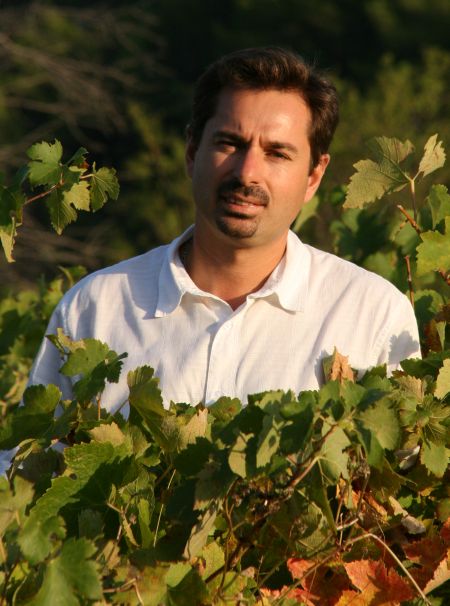
   This is the story with Rudolphe de Pins, current owner and winemaker at Chateau de Montfaucon (http://www.chateaumontfaucon.com/) in the Cotes-de-Rhone, southern France. A graduate of UC Davis in California, and then a part of the winemaking team at the prestigious Henschke vineyard in Barossa and Vieux Telegraphe in Châteauneuf du Pape, Rudolphe had a mountain of work when he took over Montfaucon in 1995. Luckily for him, a recent ancestor (Baron Louis) was the one who had begun the massive undertaking in the 1800's; renovating the facade of the massive keep and developing the vineyards.

   It fell to Rudolphe, however, to develop the vines to the point where no longer did the family feel they needed to sell their grapes of Grenache, Carignan, Cinsault and Counoise to other wineries. Rudolphe was determined, and had the training behind him to make his dreams reality. In 1995 Chateau de Montfaucon released it's first vintage in over a century and it was under Rudolphe's leadership.

   Now the original 18 HA of vineyard have grown to over 45, with some vines over 90 years of age. Montfaucon is careful to keep low yields to ensure quality flavor concentration, and the variety of soils and over 15 varietals grown ensure great depth of flavor and layering. If there is one thing that really sets Montfaucon apart from many other wineries however, it is their technique of co-fermentation.

   Co-incidentally, I read today about a winemaker in BC who applies the same techniques and has developed a cult following for the depth of flavor and layering in his wines. Sounds familiar~! Many winemakers when blending different varietals will ferment each one separately and then blend post-fermentation, even after aging. Rudolphe disagrees with this practice:

Rudolphe in the 15th century cellar

 "In order to enhance the balance of the wine, we co-ferment up to five varieties in the same tank. This increases the exchange and integration of different grapes during the important fermentation time. By controlling temperature and time on skins, typically 8 to 14 days, I am looking to extract only soft and silky tannins."

Montfaucon on the map
   What does all of this mean for the wine-drinker: for you the consumer? Rich flavors with approachable tannins and all for a reasonable price. These vineyards are literally across the river from Chateauneuf-du-Pape where the same blend triples in cost, and Rudolphe has the pedigree to charge those kind of prices. But he doesn't.

   He's building something these days. He's building brand recognition. He's building a loyal following of consumers throughout the world. He's building, in other words, a future for his family.

2008 Cotes-du-Rhone, Chateau de Montfaucon
 blend of  Grenache, Syrah, Cinsault, Carignan, Mourvedre and Counoise
$22  CAD    **** EXCELLENT VALUE ****

vine age:   average 40 years with some to 90 years
soil type: varied with mainly calcareous pebbelstone on silty sandy soil, soil with clay and sandy soil
fermentation: co-fermentation typically 8 to 14 days
maturation:   18 months in concrete and French oak
  • visual:   clear; dark plum core with slight cherry rim (faintest tint of brick)
  • nose:   clean; medium+ to fully intense developing aromas of blackberry, red and black raspberry, rich earthy background, lifted dark florals from the Mourvedre, bruised plums
  • palate:    clean; dry, moderate (very well balanced raspberry/cranberry) acids, moderate+ (well integrated and velvety) tannins, moderate+ alcohol (13.5%), moderate body, moderate+ intense and developing flavors that mimick the nose with emphasis on rich berry notes and warm earthy background. Excellent balance and structure with long length
  • conclusion:   whilst drinking well now, this wine can age gracefully for several years yet will not develop appreciably
  • FOOD PAIRING:   rich Cotes-de-Rhone pairs well with duck and game meats; always has and always will. This wine is no exception. Consider bergamot smoked duck breast over chorizo fried "dirty" rice with sweet pea-spinach emulsion and candied cranberries

   This wine is a wonderful way to become acquainted with Cotes-de-Rhone flavors and aromas. Indeed, if it were up to me this would be required tasting for all aspiring wine stewards. It's not a terribly complicated wine but, in fact, that works in favor of the new wine-drinker. What a deliciously easy-drinking way to be introduced to this regions flavors. This is a typical blend made with a-typical care and attention to detail for the price. Are you more experienced with the region and the flavors? Then enjoy something that is Chateauneuf-du-pape quality and uses the same varietals but for one-third the price~!

   This is the entry level wine for Rudolphe de Pins and Chateau de Montfaucon. The world of wine should be taking notice.


As always I welcome your comments and questions.

CINCIN~!!!     SLAINTE~!!!     CHEERS~!!!

Saturday, September 10, 2011

Saint Cosme, Chateauneuf-du-Pape

"Terroir" is a term, originally French, in winemaking that has come to mean all of the environmental impacts on the making of a wine; the land, the wind, the rain... even the winemaker is considered by many to be part of the terroir.

TheLittlestStudentOfWine
   So my apologies, firstly, for not writing for the past few weeks. Many of you know that my wife and I have a new addition to the family: TheLittlestStudentOfWine. Absolute truth; she smells every wine I taste at home and has her own list of wrinkly noses to explain how much (or how little) she likes a wine. For instance the Hainle (http://www.hainle.com/) icewine Riesling or the Summerhill (http://www.summerhill.bc.ca/) late harvest Erenfelser gets a big smile each and every time. Overly cropped Shiraz? Usually a big wrinkly face.

   But I digress.

  Today I was reading the latest Decanter Magazine (http://www.decanter.com/) and lo-and-behold, most of the articles on California were about a movement in winemaking back to the concept of terroir... winemakers who are not afraid anymore to allow the land and the grape to express themselves. This may sound like common-sense, but sadly is not the case.

   Many winemakers feel compelled by critics and points to make a wine "that-the-people-will-like", instead of a wine that they themselves will be proud of. There is chemical control, the addition of compounds, and many other "tricks" to manipulate a wine into being something other then what it wants to be. Think of it as plastic surgery for wine.

   But there is that movement that Decanter is talking about, and the movement is growing.

   And where did this concept come from again? France.

   Arguably some of the most devote students to the concept to terroir are Louis and Cherry Barruol of Saint Cosme winery in Gigondas (http://www.saintcosme.com/). Louis is the inheritor of 14 generations of dedication to allowing the southern Rhone terroir express itself through his wines. In fact, his family home has an archaeological site with the oldest wine fermentation tank in southern France, dated at 2000 years old. Serious winemaking on this land~!

   And serious about quality. Louis refutes the use of artificial yeasts during fermentation and is as sparse as can be with SO2 during production/bottling. I personally have seen poor results with winemakers who abhorred SO2 and then ended up with prematurely oxidized wines, but I am a new believer after tasting this vintage from Saint Cosme.

2007 Saint Cosme Chateauneuf-du-Pape
$65   **** EXCELLENT VALUE ****

vines:   average age approximately 60 years
climate:   cool and late-ripening
  • visual:   clear; medium+ bruised plum core with slight cherry/brick rim
  • nose:   clean; medium+ to fully intense; youthful and developing aromas; red and black cherries with definite candied notes, rich, savory winter spice background with lifted floral notes and hints of white pepper
  • palate:   clean; dry, moderate+ (young cherry/red currant) acids, moderate+ (fine, silty) tannins, moderate body, moderate+ ABV, moderate+ to fully intense and youthful flavors that mimick the nose; heavy emphasis on the young berry notes throughout. Excellent balance and structure with a long finish
  • conclusion:   already starting to show exceptional promise, this wine will blossom into a superstar given a few more years; enjoy 2015-2028+
  • FOOD PAIRINGS:   with the exciting acids and rich complexion, this wine would sing if paired with foie gras and beef... consider an oven roast tenderloin of beef with seared foie gras on Alsatian potato and leek croquette
Louis Barruol in his cellar

   In Louis' own words:


               "At Saint Cosme we usually work “à la main”. I want to make wines which express their terroir with purity and personality"

   And he succeeds. A winery that has very little following outside of France (so far) is becoming known to industry insiders as one of the value wineries in the Southern Rhone. Do they have expensive wines... of course. Are they worth the money? You better believe it.

   Bravo.

As always, I look forward to your comments and questions.

CINCIN~!!!      SLAINTE~!!!      CHEERS~!!!

Wednesday, December 22, 2010

Chateau Saint Martin (de la Garrigue), Chateau du Languedoc


Garrigue: scrubland found in Mediterranean forests, woodlands and vineyards composed of savory herbs such as rosemary, wild thyme, lavender, etc.


     Chateau Saint Martin de la Garrigue... pretty self explanatory what they think you will find as developed flavors and aromas in their wine! Yes - you find garrigue, or at least I certainly did... but in a way I had never truly experienced before. But then, I have never really explored wines from the Languedoc or the Coteaux du Languedoc before. Now I have a lecture coming up in 2 weeks and I need to be ready!

     Well first I suppose I should start off by stating that the Languedoc and the Coteaux du Languedoc are not the same. Languedoc has history with the AOC and commands much more respect with their wines, where-as the Coteaux is a bit of a "hodge-podge" of up-and-comers and blenders of table wine.

     And within this "hodge-podge" is a winery that can trace its roots back directly to the 8th century and the Romans that occupied the land, growing wine there. Indeed, on the grounds of Chateau Saint Martin ( http://www.stmartingarrigue.com/ )is a chapel that has been dated to this period and is still functional. As is the way with many things, this property has changed hands many times, and now a Mssr. Jean-Claude Zebalia is in charge of things. And in-charge he is! In 1990, only 20% of the vineyard was classified AC, but Zebalia challenged this and now 90% of the vineyard is under that classification (and selling price point!). Fight the battles that need fighting, right?

     So a vineyard in an AC with varying levels of respect, but little interest outside of France (or at least the Mediterranean), and a winemaker who will fight for the respect of his peers. Did I mention that with his white blend, they have reduced the yield down to under 30 HL/ha? That's low, if ya didn't know... really low. The AC only asks for a yield of 50 HL/ha. These facts in and of themselves make me want to learn more about Chateau Saint Martin, but the rest of their secrets (for now) will have to be discovered in the bottle and in the glass.


2008 Chateau Saint Martin de la Garrigue Bronzinelle
Picpoul de Pinet, Coteaux du Languedoc, France
 (Syrah, Grenache, Mourvèdre and Carignan)
13.5% ABV, $22 CAD     **EXCELLENT VALUE**
  • Visual:      deep garnet core with light to moderate cherry rim
  • Aroma:     fully intense; youthful; layered; showing obvious herbaceousness (wild thyme, rosemary, bay leaf & savory), black currants, plum tomato, saskatoon berries and blueberries, deep layers of incense-like quality (myrrh & frankincense)
  • Palate:      0 dryness, moderate+ crisp acids, moderate- well restrained and fine tannins, moderate+ body, moderate+ slightly hot alcohol, moderate+ to fully intense flavors; youthful and fresh; layered; palate is showing much of the nose with oak taking over a bit... fruit comes in second and lingers with the tomato and savory herb, long structure
  • Conclusion:     this wine drinks far beyond its price (to me). It has depth, balance, layers and an obvious willingness to showcase its terroir. I couldn't ask anything more for $20 and expect far less
  • Pairings:     a well made Bolognese, rabbit in braised with tomato and butter, even a steak tartare would do well
     And so begins my adventure to learn the Languedoc and the Coteaux du Languedoc... wish me well!


Tuesday, October 12, 2010

Vacqueyras, by Xavier

Vacqueyras; a small place, off to the side of the giant known as Chateauneuf-du-Pape. It really is just up the road, perhaps a 30 minute drive, depending on who's driving...


With it's sleepy-town feel, and quiet way of life, one might never know the passion, the ardor, the fervor with which these Provencals work with their vineyards. Vineyards that until 1937 had no official recognition from the French government, and in 1971 were only classified as vins-du-table. Small glory for the cousins of the mighty wines down the road. Finally the time came when even the French must change their way of thinking, even about wine, and Vacqueyras was declared its own D.O.C. in 1990... only 500 years after the first records of wine cultivation in the area.


Enter the wine guru Xavier Vignon ( www.XavierVins.com ) who as you may remember from an earlier post was a brilliant blender of Champagne, was a consultant for wineries on 3 (or is it 4?) continents, and is intimately connected with a multitude of wineries in the southern Rhone. Which is where one finds the town on Vacqueyras and it's red wine blend (red wine is 97% of total production for the area) of 50% or more of Grenache, Syrah, Mouvedre (at least 20%) and Carignan (no more then 10%). Well now you can't say I never learned you nothing.


**grin**


2007 Vacqueyras, by Xavier Vignon
14.5%ABV, $25 CAN (BC)
  • visual: deep plummy garnet centre with cherry rim, slightest amount of brickishness
  • nose: fully intense nose of stewed figs, light anise, backbone of southern Rhone terroir and its rare roast beef qualities, slightly hot alcohol, candied blackberries
  • palate: moderate+ acids, moderate++ tannins, moderate++ intense palate; mimicking the nose well, but with slightly less finesse... fruit is driving the palate, with a solid undertone of oak. Honestly, at this point, the oak is overwhelming the terroir. Strong structure and moderate+ body.
  • PAIRING: tannins like this need meat, and I would serve it (and did!) with a classic bolognese. Any braised beef or lamb will do well, as this wine has power to spare (if little delicacy). Consider Spanish or Portuguese spices! Either would enhance notes in the wine and balance the wines aggressiveness.


A good wine, if you serve it with the right food. On its own, right now, the tannins overwhelm the palate (IMHO) - but then - I know guys who drool over wines like that. To each their own!

CIN CIN!  SLAINTE!

Monday, September 27, 2010

Xavier, Cotes du Rhone (France)

As any Google search will tell you, Xavier Vignon ( http://www.xaviervins.com/ ) is a consulting oenologist for several notable wineries in the Cotes du Rhone... what they don't tell you, is who those wineries are. I don't know who they are either (sorry I can't solve the puzzle like Rick Castle would).


What I can tell you is that Xavier is a man very intimately connected with the local industry, and in a rare position to know who is doing the best of what in any given year. He now uses this long accumulation of knowledge to create his own, reasonably priced, blends.


The Cotes du Rhone blend is a traditional Chateauneuf du Pape blend of 50% Grenache, 30% Syrah & 20% Mouvedre. I think it's become such a stand-by and classic style of blend because those percentages (in general - any given year may change it) reflect a true sense of balance in the wine. This blend certainly achieves those goals.


2007 Xavier, Cotes du Rhone blend
$20 CAN (BC), 14.5%

  • deep bruised plum center colors with light cherry rim
  • full- intense nose primarily of black raspberries, black cherries, ripe plums, leathery oak (and a whiff of slightly hot alcohol)
  • moderate acids, moderate+ slightly gravelly tannins, moderately intense palate that mimics the nose well, but is slightly less developed and tapers off quickly. Think more green cherries rather then black.
  • moderate+ body, moderate+ structure
pair with: something with a bit of fat to it, to balance the acids. Steak with a compound butter? There's enough structure that it can handle lamb as well (once again playing off the acids)... I have it! Try a grilled veal cutlet (bone in) with a wild mushroom cream demi-glace... serve with creamed spinach, parsnip & apple puree & roast bell peppers.

This is a good wine for the money, and as those of you in the States can buy this for $15 instead of $20 - an even better buy. It certainly outperforms its very reasonable cost!

CIN CIN! SLAINTE!