Showing posts with label Porto. Show all posts

Sunday, February 2, 2014

Ferreira 1991 LBV Porto (Port)

http://eng.sograpevinhos.eu

Legacy.
Every parent, from the moment they set eyes on their first child, yearns to leave a legacy. I don’t imagine that history would show anything else and I don’t imagine that the future will either. No, when I look at my daughter, I too feel the pull; the tug at my heart to create something that will stand-up to time.
porto and duoro
Dona Antonia Ferreira did just that. In the 1800′s, in a time when women weren’t allowed to vote and the “Rule of Thumb” meant a man could beat his wife with a stick as long as it wasn’t wider then his thumb (that’s a fact), this brave soul bucked traditional, reversed roles, and took the reins of her family business. She had been left a widow at age 33, had a young daughter to look in the eyes, and had a legacy already of four generations of family owned, family run wine in the Duoro region of Portugal.
Antonia took that legacy on a journey that has lasted centuries and shows every intention of lasting centuries more.
She built roads, cared for the workers, expanded vineyards, fought the dreaded phylloxera and traveled throughout Europe to find ways to save her crops. In short, Antonia lived for more then just herself. She came from money but her father had squandered much of the family fortune by the time Antonia took control of what became one of the most influential port houses in the world.
So she rebuilt it. To what extent?
Dona Antonia’s daughter, Maria, eventually became the  Countess de Azambuja. Amazing for a woman who could legally be beaten by her husband and had only the shakiest of legal principles to own her family business rather then see it go to an uncle or male cousin.
And the wine? As always my friends, the proof is in the glass:


1991 LBV

91+ points

  • visual:   clear; full intense garnet core, slight cherry rim
  • nose:   clean; medium+ to fully intense developing aromas of dried blueberry, stewed blackberries, fresh black raspberries and Saksatoons, woodsy tones, savory herbs and tomato leaf, dark tea
  • palate:   clean; sweet, medium+ crisp strawberry acid, medium+ chalky/chewy tannin, medium+ to full bodied, medium+ alcohol (20.5% ABV), fully intense developing flavors that are perfectly in-line with the aromas; bright red and black berry acids hit the palate full-speed and are followed by a plethora of herbaceous/floral tones… well-integrated oak follows with some dark cocoa notes. Very good balance, excellent structure and medium+ to long length; keeps developing up to 20 seconds
  • conclusion:   a joy to drink now, but can be cellared for decades. Enjoy 2013-2023++
  • FOOD PAIRING:   the high sugar level in this fortified wine cry out for balance! Consider then Roquefort infused croque-en-bouche with almond caramel, edible orchid garnish…. the savory tones of the cheese are a tried-and-true counterpart to Port’s naturally heavy fruit-induced sugar rush
porto-ferreira small labelLegacy.
Dona Antonia couldn’t have known how far her quest to ensure her daughter’s prosperity would take her family brand. The name Ferreira is synonymous with unwavering quality and brilliant value. The new head of the winemaking team, Luis Sottomayor, took up the mantle of command in 2003 and has since been nominated as the best winemaker in Portugal twice.
In December 2013, Ferreira port was also voted by Wine Spectator into the prestigious TOP 100 list for the year as well as receiving the highest scores per category for several of its fortified wines.
And what does all of this mean for you?
Value. Plain and simple. Here is a brilliant quality LBV (Late Bottle Vintage) which is considered to be inferior quality to a recognized Vintage Port. And yet, it has aged gracefully for 20 years and could have lived for many more had I the patience. It is not every port-house that can boast the same skill… under promise, over deliver – the creed of great business people the world over and obviously an unspoken mantra in the halls and on the slopes of Ferreira Porto.
As always, I look forward to your thoughts, comments and questions. Here, or:
on Twitter @AStudentofWine

Sunday, March 18, 2012

Fonseca Terra Prima Porto

Someone recently asked me what the real difference between winemaking and organic winemaking is. In simplest terms, all farmers need to fertilize their crops; whether it be grapes or corn.... organic farmers won't use artificial fertilizers, they use natural fertilizers (and preferably produced on or very close to their own farm).

   And what does this do for the wine we ask? Well nothing really. Nothing you say? But that's the point I say~! Artificial fertilizers use non-organic compounds, they rely on man-made chemistry to do the work of Mother Nature. These compounds leech into the soil, and thus into the food (grapes) and thus into the wine; changing  the wine.

   Organic practices also severely limit the amount of sulphites allowed, which is of vital importance for those of you who find red wines in particular give you a bit of skin flush, headache or a sore tummy. Yes, the sulphites are still there: it's a natural part of the winemaking process. But! But it is severely limited and you should be able to consume organic wines with limited reaction or no reaction at all.

   The patriarch of the port community, Fonseca Guimaraens (http://www.fonseca.pt/) is the first winery in the Douro region of Portugal to adopt certified organic practices for it's port production from start to finish. This includes the aguardente (similar to brandy) that is used to fortify the red wine. And why would House Fonseca make this bold move, years before anyone else in the region is ready to do so?

   Because they are innovators.

David Guimaraens
   (read a recent article of mine of port production if you wish to learn more about the Douro region: http://astudentofwine.blogspot.ca/2012/01/porto-hutcheson-colheita-1999.html ) 

   Even though Fonseca Guimaraens has been in continuous operation since 1822, 6th generation family winemaker David has launched into the unknown not just with organic principles, but also through technology. Fonseca recently showcased their newest addition to the staff, a device of their own invention: a piston-paddle vat known as "Port-Toes". It has been created with the purpose of more efficient temperature control  during fermentation thus allowing for a gentler touch with greater results.

   And the results? As always my friends... in the glass.

Fonseca Porto Terra Prima n/v
  • visual:   clear; fully intense inky purple core with slight cherry rim, no bricking
  • nose:   clean; moderate+ to fully intense and developing aromas of ripe red cherries, succulent plums, blackberries, dark chocolate and warm earth
  • palate:  clean; sweet, fully intense (red and black cherry) acids, moderate+ (well integrated and soft) tannins, moderate+ body, moderate+ABV(20%), fully intense and youthful flavors relying heavily on fresh red berries and light floral notes to make a heavy impact. Moderate structure and very good to excellent balance with only medium length
  • conclusion:  the youth of the vines is apparent. Whilst there are rich flavors, they are somewhat monotonous, however the finesse of the structure leads me to believe that future vintages will rival some of the truly great ports of the world. Drink now, holds to 2017.
  • FOOD PAIRINGS:   with wines of this sweetness, it's a bit of folly to pair with anything even close to the same sweetness. Consider a Savory dark chocolate torte with lemon whip cream and stewed plums

the "Port-Toes"
   And so a bit of a dichotomy; House Fonseca. Almost two centuries old, they utilize state of the art facilities and "ahead-of-the-curve" techniques in the vineyard to create purist flavors with sublime structure. I can only imagine that Manuel Pedro Guimaraens, the man who bought controlling interest in the  Fonseca & Monteiro Company in 1822 and started this port house which is all about family, is looking down and watching this new generation with pride.


                As always, I welcome your comments and questions.


CINCIN~!!!     SLAINTE~!!!   CHEERS~!!!

Tuesday, January 31, 2012

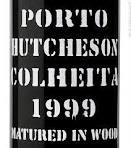
Porto Hutcheson, Colheita 1999

What is port, Porto or "port-styled wine"? Simply put, Porto is a fortified red wine coming from the Duoro region of Portugal.

   Starting with the red part, Porto wines are usually a blend of the native varietals, of which there are literally hundreds. The wine laws are very old in the Duoro; in fact the Duoro is the oldest protected wine region in the world having had laws passed in 1756 to safeguard it's wines authenticity. And so, back in the day, perhaps there were winemakers dabbling in any of the hundreds of applicable varietals but these days the dominant ones are  Tinta Barroca, Tinta Cão, Tinta Roriz (a.k.a. Tempranillo in Spain), Touriga Francesa, and Touriga Nacional.

   And what do I mean by fortified? Well as I said, the Duoro has some very old laws and several of these laws limit the quantity of Porto that can be produced in any given year. What does a port-producer do with the rest of the wine? Well some of it will be kept or sold as table wine (such as the famous Quinta de Crasto) but much of it will be distilled down to a local liqueur known as Aguardente. This is moonshine, in the most beautiful way. As it comes from the wine that it goes to fortify, the flavors will marry wonderfully but the real joy in adding the liqueur is that it stops the fermentation of the wine, leaving behind any residual sugar to remain as sugar.... acidic and playful tawny ports or sugary sweet candied ruby ports, it is the Aguardente that makes the wine what it becomes.

  And so what of the Duoro? The Duoro is the name for both the wine-region and the massive river that carves it's way through northern Portugal. The wine gets produced in the wine-region which is inland from the coastal city of Porto and, back in the day, could only be transported down the mighty river by boat. Hence the fortified wine had to travel through Porto hence the name we give it.

   And if you're wondering why the Portuguese couldn't ship the wine by anything other then the river? It's the canyon walls.... hundreds of miles of steep gorges hundreds of feet deep and in the 1700's and 1800's a daunting journey, especially compared with the relative calm of the river.


   So what of Porto Hutcheson? In relative terms, Hutcheson is a new-comer; having been brought into the world in 1913 by Manuel de Almeida (http://www.porto-barros.pt/client/skins/english/site.htm). Manuel was a winemaker, yes indeed, but it seems to me that he was a businessman as well (perhaps above and beyond all else). Over the course of his career Manuel succeeded in not only opening Hutcheson, but keeping it open through 2 World Wars and a Great Depression. His grandson Manuel has succeeded and Hutcheson is still a family owned and operated endeavour.

1999 Porto Hutcheson Colheita
$35-40 USD    *** Very Good Value ***
  • visual:   clear with trace sediment; light ruby core with substantial orange-brick rim
  • nose:   clean; fully intense and developing aromas of candied orange peel, light caramel, dates and figs, cranberry, raspberry juice, woodsy notes and a touch of clove finish
  • palate:   clean; sweet, fully intense (pomegranate) acids, full alcohol, medium body, medium (soft, chalky) tannins, moderate+ intense and youthful flavors with emphasis on red berry notes to start; cranberry, young raspberry, fresh strawberry, pomegranate followed by savory earthy flavors, wood notes and citrus peel. Very good balance, good structure and medium length
  • conclusion: this wine has probably peaked, but will hold for several years. Drink now to 2020
  • FOOD PAIRING:   Vivid acids and high sugar levels can be a challenge; you will want to use some dairy to balance the acidity but keep your sweetness in the dessert to a minimum or risk making the port seem off-balance. Consider: dark chocolate torte with olive oil and balsamic vinegar, chevre ice-cream and star anise stewed plums

   Manuel de Almeida was an impressive businessman: opening his own business and keeping it thriving through nearly insurmountable odds. No, he didn't just keep it running, he grew it... I often worry about what is or is not possible in this time of economic uncertainty, and yet the Universe keeps showing me examples of what IS.

   More then we can ever hope for or imagine...  and I can imagine alot~!

As always, I look forward to your comments and questions.

CINCIN~!!!     SLAINTE~!!!     CHEERS~!!!