Showing posts with label beef bourguignon. Show all posts

Saturday, November 16, 2013

COS di Vittoria, organic/bio-dynamic wines, Sicily


The first time I tasted the COS Vittoria wines, it was at a very large, very loud, very crowded industry-event. Hundreds upon hundreds of purchasers, sommeliers, writers, winemakers, merchants, etc were (by their nature) hawking their wares, politely (or not) refusing a sample they knew to be dross, smiling at everyone always, always. And in the midst of this cacophony I stumbled, quite literally, into the table of WineQuest Wine and Spirit Brokers inc.

I always try to go to these events with something of an agenda - mostly to keep myself from falling prey to every bottle that catches my fancy and every merchant who hires a beautiful young woman, mermaid-like, serenading sommeliers and writers to certain doom on the rocky shoals of inadequate production values. The WineQuest table had no such Siren, only two gentlemen enjoying a dram of their own wares and seeming quite pleased with the results. Now this peaked my interest... I simply had to taste the wine that the merchants couldn't help but take the odd sip of.

sicilia_vittoriaThe wine was the COS Vittoria frapatto and I was flummoxed. True enough, Italy has over 2000 cultivated varietals of grapes and I do not profess to be  a Master of Italian wine. However, I had never even heard of this varietal and was intrigued on yet another level. Let's be honest here, how exciting is it to try yet another Chardonnay or Merlot?

Frapatto I discovered is indigenous to a small area of Sicily and has a lengthy history on the island, having been written about since the 1700's (many thanks to the iconic Jancis Robinson and staff at www.JancisRobinson.com for confirming much of my independent research). Usually blended, this grape is capable of conveying minerality with the style and elegance one would expect from Burgundy, and with some similar qualities of red berry and warm spice notes that I enjoy in craftsmen-level products.

I tasted the wine, was thoroughly impressed, and needed to move on through the throng. I gave Peter Jones of WineQuest my business card and waded through the masses to my next salubrious sampling... less then a week later, I came home from a long day to find two bottles of COS Vittoria on my veranda and their adjoining spec-sheets in my email. What I discovered in that evening's research was that my taste-buds had steered me in the direction of true artisans in Sicily~!
Giusto hard at work
Giusto hard at work

 COS Vittoria has been producing a level of wine far ahead of the curve since it's inception in 1980. That was the year that a triad of wine-geeks decided that whilst pursuing their education in such lofty pursuits as Architecture and Medicine, they would spend the summer reviving an old uncle's vineyard. We all know that students, by-and-large, have no money and none knew that better then friends Giambattista Cilia, Giusto Occhipinti and Cirino Strano as they did everything by hand for the meager production of 1456 bottles of Frapatto. It's important to keep in mind that, at the time, there was only one vigneron on the island who was producing frapatto as a single varietal and, in total, there was less then 1000 acres dedicated to it's production worldwide. To the unbeliever, this was a varietal on the brink of extinction; relegated to being turned to must to enhance the flavors of it's more prestigious cousins in southern France (Burgundy) and northern Italy.

But Sicilians support their own, and when the triad of brave/foolish entrepreneurs went in search of sales for their hand-crafted wine, they found merchants and restaurateurs willing to give it a try (and glad that they did). The quality spoke for itself, and soon several other producers in the region started making single varietal frapatto and bottling it. In less then a decade the trio had reached a level of success that allowed expansion of the facility as well as the importing of more expensive tools such as French oak barriques. These costly developments did not have their desired effect~!

vineyards at COS Vittoria
For when the trio (soon to evolve into a duo as Strano turned his attention solely to medicine) began to open bottles of new vintages matured in the French barriques, they found that much of the clean mineral tones and warm earth notes had been replaced or covered over by buttery, leathery oak. This was not the wine that they had fallen in love with!! Giambattista and Giusto had to find a way of maturing the wine in a manner that allowed for evolution yet masked none of the characteristics that made it so unique. At first they used older barriques and larger barrels with more neutral Slavonian oak.

It was also at this time that the winemakers understood the need for the winery and the vineyard to take a holistic/natural approach to the craft. Bio-dynamics principles were applied, the use of chemicals prohibited, and the utilization of the 400 litre ancient amphorae was introduced. Here was a maturation vessel that allow for the correct amount of contact with oxygen and yet imparted no flavors that would dilute the utterly captivating qualities of the calcareous/umber sandy soils.

These endeavors, and many more, led to COS Cerasuolo di Vittoria being award the prestigious DOCg status, the first and only wine of Sicily to do so. And is this the only proof that this labor-of-love was worthy of such extreme efforts? Not at all. Not only are there over 40 new producers of the blend of Frapatto and Nero D'Avola (Cersasuolo) in 30 years, and not only have Italian and international wine press raved about the wines, but there was the proof in my glass which spoke volumes!


2010 COS frapatto

cos frapatto 2012

90+ points 

*benefits from 1 hour decant or 1-2 runs through the aerator
  • visual:   clear; pale ruby core to bright cherry rim, no signs of aging
  • nose:   clean; fully intense and youthful aromas – much like Morgon/Fleurie – bright tones of fresh/slightly candied berries, sophisticated line of keen minerality throughout the palate, Old World funk/barnyard
  • palate:   clean; dry, medium+ to full young raspberry acid, medium tannin, medium- body, medium- alcohol, medium+ intense and very youthful flavors; the minerality that lurked beneath the surface of the bouquet jumps to the surface in the palate! Very good balance, excellent structure, medium+ length
  • conclusions:   the organic viticulture has allowed for a transparency in the soil or, as the French would call it, climat. This type of viticulture I find also always allows for long life-spans. Enjoy 2013-2020
  • FOOD PAIRING:   as it reminded me so much of northern Beaujolais, I would use it as such. Serve slightly chilled (14/15C) and with cold smoked duck breast on wild greens, pickled Bing cherries, Boursin cheese on warm dark rye
 I adore that both of these wines are genuine, and genuinely stylized. By that I mean that the winemaker has his own sense of style and composition, and whilst following his own sensibilities has crafted wines that are still classically Italian and utterly Sicilian. Yes, I said the frapatto has Beaujolais-like qualities to the palate, but the aromas are pure Vittoria and take one instantly to an Old World way of life.

2010 Cerasuola

91+ points Cos Cerasuolo_di_Vittoria 201

60% Nero D’Avola and 40% Frapatto
age of vines: average 28 years
*benefits from 1 hour decant or 1-2 runs through the aerator
  • visual:   clear;   pale ruby core to light cherry rim, slightest signs of aging
  • nose:   clean; medium+ intense and developing aromas of warm blackberry/raspberry compote with fresh garden herbs, more of the Old World funk/barnyard (in the best of all possible ways),
  • palate:   clean, dry, medium+ raspberry acids, medium+ chewy tannin, medium+ body, medium- alcohol (13% ABV), medium+ developing flavors that are much in-line with the aromas; a beautiful array of warming red and dark berries, fresh garden herbs, clean earth tones. Minerality is carried by the Frapatto, but not as pronounced as when it is single-varietal. Very good to excellent balance and structure with medium+ length on the palate
  • conclusion:   this wine as well has a prodigious life ahead of it. It will cellar easily for another 5 years or longer, but should most likely be consumed before 2018
  • FOOD PAIRING:   if the Frapatto on it’s own is like northern Beaujolais, then blended with Nero D’Avola it becomes more like Burgundy… I would enjoy it as such: served slightly chilled with a wild mushroom risotto or even the classic beef bourguignon although the acids are not truly high enough to prepare bourguignon a la method classique (which is very high in fat)

I had my first taste of COS di Vittoria because I was intrigued by wine-merchants who needed no gimmicks, no flamboyancy, no carnival-like show to sell their wines. These gentlemen believed in their product, and that was enough for them... I had my last taste of their wine and wondered how it was that I had never heard of it before.

Organics, bio-dynamics, ancestral-farming, sustainable-viticulture... all of these terms mean more then the sum of their parts: it is a journey, not a destination. It is my distinct privilege to have been here to witness this young winery, in this ancient place, which is reviving the most ancestral of wine-making practices to  build a brighter future. With a glass of wine, and a hefty portion of Belief I have been encouraged to see that to some winemakers, personal satisfaction means more then any score in a magazine. In the 1990's, when only a handful of wine-critics seemed to control what wines sold and which did not, these newcomers decided that the trend of oak, oak and yet more oak was - to them - an injustice to their wine. They risked offending the gods of oenology and did what they felt was right, what was best for their wines.

I hope that I have the good fortune to taste many more wines made with such fortitude.

As always, I welcome your comments either here or on Twitter @AStudentofWine
CINCIN~!!!     SLAINTE~!!!     CHEERS~!!!

Sunday, August 7, 2011

Tinhorn Creek Cabernet Franc, Okanagan Valley DVA, BC

So before I start to talk about Tinorn Creek winery again (www.Tinhorn.com), I think it's important to talk about Cabernet Franc; the much planted varietal that plays such a pivotal role in so many great red wine blends.
Cabernet Franc (courtesy Wikipedia)

   Cabernet Franc is very closely related to Cabernet Sauvignon: in fact, Cab Franc is one of the parents. So what does this mean for flavor, color, aromas? Well of course there are going to be similarities; both are red wine varietals, both are deep in color though Cab Franc will be lighter in pigment (a trick to use in a blind tasting), both have the obvious red berry flavors though Cab Sauv will tend towards blackberry and plum and Cab Franc will tend towards (depending on where it's grown) raspberry and red currant and then for the aromas there are distinctive differences. Cab Franc has a unique vegetal quality which is accentuated by over-cropping and/or underexposure and will be perceived quite often as bell peppers and/or a "stemminess".

   Now overcropping is something that any viticulturist can avoid if s/he wants to and is motivated towards. That being said, sometimes there are fiscal reasons for over-cropping and sometimes even viticulturists just don't care about quality - they care for quantity. Underexposure is a different matter altogether.

   A winemaker can be motivated to the creation of quality wine, and yet the weather can choose not to co-operate (much like this Summer of 2011 in British Columbia).... by mid-August many winemakers and their vineyard managers are talking about being weeks behind schedule due to excessive cloud cover and mild temperatures. What to do? Well unfortunately, all the skill in the world can't fix something that goes awry in the vineyard.

   Which brings us to one of the primary reasons why Cab Franc was planted and continues to be planted in the first place: it buds and ripens an easy week earlier then it's child Cab Sauv. One week may not seem like much difference, but in regions where late rains or hail are a reality, that week may make the difference between a successful harvest and a failure.

   And where do we find great plantings of Cab Franc? Almost anywhere winemakers plant Cab Sauv and worry about not reaching phenolic ripeness; the Libournais region of Bordeaux (my much loved AOCs of St Emilion and Pomerol) and the Loire Valley of France, the north-east corner of Italy, parts of California and along the northern border of the United States, British Columbia, the Niagara Peninsula and Prince Edward County regions of Canada and throughout the New World.

   So here in beautiful BC we are blessed with almost everything a winemaker could want, with the exception of a lengthy enough summer (in most places) for a winemaker to be able to "properly" cultivate Cab Sauv. What's a winemaker to do? Plant Cab Franc. This is done as insurance for the "Bordeaux-style" blendings for which we have garnered some recognition and, now, as a stand-alone single varietal- sometimes as a late-harvest wine and even as a rosé.


   Tinhorn Creek is rather renown in British Columbia (and in Canada) for the quality of it's Cab Franc. To be completely honest though, the acknowledgements come not only for the quality - but for the absolutely reasonable price that they sell it for. Almost anyone these days can make a decent wine, given the right growing conditions... but it is a dying breed the winemaker who consistently sells a good product for a reasonable price.

2009 Tinhorn Creek Cabernet Franc
$19.99 at the winery   *** Very Good Value ***
~~ For The Cellar ~~
14.8% ABV

viticulture:   100% from their Diamondback Vineyard on the Black Sage Bench
maturation:   12 months in American oak barrels
awards:        

2007 Cabernet Franc

SILVER Pacific Rim International Wine Competition, 2010
SILVER Taster’s Guild International Wine Judging, 2010
BRONZE Intervin International Wine Competition, 2009
BRONZE World Value Wine Competition, BTI, 2009
  • visual:   clear; moderate bruised plum core with substantial cherry rim (slight amount of brick)
  • nose:   clean; moderate+ intense youthful aromas of red currants, early raspberries, savory herbs, green bell pepper, sweet wood notes
  •  palate:   clean; dry, moderate (well-integrated red currant) acids, moderate+ (slightly green and grippy) tannins, moderate- body, moderate+ intense youthful flavors mimicking the nose with pronounced savory vegetal notes, a long dry finish of red berries, dried mushrooms and sweet wood. Very good balance and structure, long length
  • conclusion:   whilst this is already a good wine, it still needs some time to develop in bottle and become a great wine. Best (Fall) 2012-2016
  • FOOD PAIRINGS:   I would work off the lighter body and almost delicate structure and use it much like a Burgundian Pinot Noir, pairing it with a traditional Bourguignon with wild BC mushrooms and local vension... I think the slightly vegetal quality will play well off of venison's gamey-ness, the wild mushrooms pull fungal qualities from the wine and the hint of cream and demi-glace balance the wine's moderate acids
Tinhorn's Diamondback vineyard

As always, I look forward to your questions and comments.

CINCIN~!!!     SLAINTE~!!!     CHEERS~!!!

Monday, April 18, 2011

Calafate Reserva Pinot Noir, Patagonia, Argentina

Bordering Chile, the province of Neuquen in Argentina is still a relatively unexplored place for westerners.


   Even Argentinians  are newcomers to the region; the capital city of Neuquen (so named, as with the province, for the river Neuquen that runs through it) only had about 5000 citizens in the 1930's. Today that same city boasts over 285,000 people... a petroleum boom is one of the main reasons for the immense development in the region.

   And newer still is the interest in viticulture in this area of Patagonia. Neuquen has a relatively arid climate (depending on the part one speaks of), and with it's elevation also has a fairly short growing season. Something certainly of concern if one wanted to grow Malbec as is done in the neighbouring region of Mendoza, but imminently suited to the growth of Pinot Noir. And this is exactly what the Canadian winemaker Pascal Marchand came here for.

Pascal Marchand
   Pascal Marchand has been "cutting his chops" on the proving grounds of Burgundy since 1983, and now consults with winemakers the world over. His Burgundian style is keenly felt in the Calafate Reserva, and in his owns words "rightfully so". Pascal talks about how the Burgundian techniques, more then any other he has had the chance to truly incorporate, truly allow for expression of terroir.
The approach we have in Burgundy is the best way to reveal the expression of the different terroirs, and therefore in each one of these areas you make wines that express their origins
   With the cooler climate that Neuquen has (in comparison to Mendoza) I can understand Pascal's drive to utilize techniques that suit the land. It would certainly seem that he has found that.


2008 Calafate Reserva Pinot Noir
Neuquen, Patagonia, Argentina
Bodega Universo Austral

14% ABV, $17 CAD   *** VERY GOOD VALUE ***
http://tagliquorstores.com/fox-reach/
  • visual:   clean; light to moderate ruby core with cherry-brick rim
  • nose:   clean; moderately intense and developing aromas of red raspberry, light blackberry, old leather, light savory herbs, mild exotic spices, mild cocoa
  • 
    palate:   clean; dry, moderate+ vibrant red currant acids, moderate- slightly grippy tannins, moderate alcohol, moderate- to light bodied, moderately intense and developing flavors mimicking the nose... red berry flavors are crisp and lively and hit the palate quickly, leaving the darker more develop flavors to linger. Good balance and very good structure with medium length
  • conclusion:   drinking well above it's pricepoint - this wine will do well now until late 2012 and possibly beyond. The concentration of flavors isn't strong enough for me to want to hold onto it though - and the flavors will not improve with age
  • PAIRINGS:   a rich beouf bourguignon with wild mushrooms will do well - especially with a generous amount of wild mushrooms which will help the mild fungal notes in the wine that want to come out and balance the fruit
Neuquen, Patagonia, Argentina
As always, I welcome your comments and questions.

CINCIN~!!!     SLAINTE~!!!     CHEERS~!!!


Friday, April 15, 2011

Mid-Tier wines of Spain; a comparative

"Well what is mid-tier wine?" I asked myself.

   At this point in my life (and career) I have come to agree with most of my more learned colleagues in the line of thinking that almost anything can be mid-tiered, depending on one's point-of-view. I know people who have a rather ridiculous salary who consider $50 to $150 to be mid-tier and I know people who who never even consider paying over $30 a bottle. To each their own, I'm not here to debate the finer or lesser points of either - but merely to speak from my own experience. In my fiscal reality, $20 to $35 is mid-tier... anything over $50 is definitely becoming high end and something I would drink rarely (perhaps once or twice a month), and anything under $20 to me is entry level... perhaps I've met a few entry level wines that deliver far and above their price-point, and perhaps I've had a $100 bottle (or three) where I wondered who it was that came up with the over-inflated price.

   But, as usual, I digress.

   Mid-tier wines; $20 to $35, all from Spain. All available in Canada.

   For those of you who have never had a comparative tasting, whether it be with friends or colleagues, I cannot recommend it highly enough. It is a brilliant exercise and just plain old fun~! We sat the six of us, half sommelier trained and half neophytes, all passionate about wine, and talked about the bottle we had brought to the group... we learned from each other not only technical aspects of wine, but how each persons' palate may draw different notes from a wine; both in aroma and flavor. I was absolutely silent (a rarity - ask Mrs AStudentofWine) when the "least learned" of the group found a wine that spoke to her and she rattled off a plethora of tasting notes that Anthony Gismondi would have been impressed by.

   As I said, it was a great learning experience, and who wouldn't have fun cracking open a half-dozen bottles of wine with some friends old and new?

2008 Barco de Piedra, Pescqura del Duero
Spain, Castilla y León, Ribera del Duero
13.5% ABV, $27 CAD   ** VERY GOOD VALUE **
100% Temperanillo

aged:    5 months in (85%) French oak (15%) American oak
  • visual:   clean; garnet core with cherry rim
  • nose:   clean; moderate- intense and developing aromas of worn leather, drying black cherry, rhubarb, light cassis background
  • palate:   clean; dry, moderate+ red currant acids, moderate+ slightly grippy tannins, moderate alcohol, moderate body, moderate+ intense developing flavors mimicking the nose with Burgundian qualities. Good body and structure, medium length.
  • conclusion: drinking well now to 2013
  • PAIRINGS:   pair with Beef Bourguignon just as with a Burgundian Pinot Noir - I found many similarities in the construction, but that's just my interpretation

2007 Juan Gil
Jumilla, Spain
15% ABV, $28  CAD ** EXCELLENT VALUE **

100% Monastrell
terroir:   shallow chalky soil on a bed of limestone
climate:   continental
aged:   12 months French oak
  • visual:   clean; garnet core with cherry rim
  • nose:   clean; moderate+ developing bouquet of each red and black berries, light eucalyptus, light vanilla, slight brine minerality, soft black florals like irises, distinct spicy anise on the mid and end notes
  • palate:   clean; dry, moderate+ to fully intense red and black currant acids, fully intense slightly grippy tannins, moderate+ alcohol, moderate body, fully intense youthful flavors which mimick the nose well (predominately red fruit). Excellent balance and structure, long length
  • conclusion:   Too young to drink well - this will peak 2013 to 2018 and perhaps longer
  • PAIRINGS:   this wine cries out for venison prepared in just about any way imaginable; consider a flank finished with bourbon demi served with wild mushroom ravioli (to play earthy notes off the black florals in the wine)
2005 Los 800
Priorat, Cataluyna, Spain
14% ABV, $26  **VERY GOOD VALUE **
http://www.bcliquorstores.com/

45% Garnacha, 35% Carignan, 10% Cab Sauv, 10% Syrah
soil:   black slate and quartz with mica
  • visual:   clean; light garnet core with large cherry-brick rim
  • nose:   clean; fully intense and developed aromas of baked earth, dried cassis, dried black florals, savory black licorice (root), slight star anise, spicy black peppercorn finish
  • palate:   clean; dry, full red currant acids, moderate velvety tannins, moderate+ alcohol, moderate+ body, moderate+ intense and developed flavors mimicking the nose with a distinct tart plum quality and crispy mineral backbone. Good balance, excellent structure and medium+ length
  • conclusion:   drinking as well as it ever will - enjoy now to 2013(14)
  • PAIRINGS:   with the intense acids it is a perfect appero... use it to wake up the palate or be daring for main course and serve it old, old school with a roast beef and oyster stuffing~!

2008 Atteca "old vines" Garnacha
Bodegas Zabrin, DO Catalayud
14.5% ABV, $30 CAD  *** EXCELLENT VALUE ***

100% Garnacha/Grenache

vines:   80 to 120 years of age
yield:   less then 1 ton per HA
  • visual:   clean; moderate+ garnet core with light cherry rim
  • nose:   clean; fully intense and developed aromas of rich florals, red and black berries especially blackberry, red and black raspberry, cherry compote, background of rich coffee and green peppercorns
  • palate:   clean; dry, full raspberry acids, light+ to moderate slightly grippy tannins, moderate- alcohol, moderate- (light+) body, moderately intense and developed flavors much the same as the nose but dampened. Excellent balance and structure with medium- length
  • conclusion:   even though there are some red berry notes, this wine is already slowing down and getting ready to die... enjoy now to 2013 max as the concentration is slipping
  • PAIRINGS:   oddly enough - enjoy it as a Sherry~! try this with a rich beef consomme and savor the balance the fatty beef flavors will give to the overachieving acids in the wine

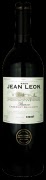
2005 Jean Leon Cabernet Sauvignon
Penedes district, Catalonia
13.5% ABV, $26 CAD **** BUY THIS NOW ****
(Liquor Control Board of Ontario)

85% single estate Cabernet Sauvignon and (15%) Cabernet Franc
vines:    planted 1969, the first Cab Sauv in Spain; 300 m elevation, south facing
aging:   25 months French oak
medals:   Silver @ Decanter awards 2010
  • visual:   clear; light cherry core with large cherry rim and the barest hint of brick
  • nose:    clean; fully intense developing bouquet of rich wood, blackberries, red and black raspberries, clean barnyard... very Haut-Medoc (Bordeaux) styled nose in my (humble) opinion
  • palate:   clean; dry, moderate+ red currant acids, moderate+ chalky tannins, moderate+ alcohol, moderate+ body, moderate+ developing flavors mimicking well the nose. Excellent balance and structure and very long length
  • conclusion:   this wine is a steal at under $30 CAD.. if you find it (there are only about 8 cases in all of Ontario as I write this), then buy as much as you can. This drinks well now, but will improve over the next few years. Consume 2013-2018 (and can keep beyond I'm guessing)
  • PAIRINGS:   buy the best beef tenderloin you can (free range), roll it in the best coffee you can buy, then sear it into carpaccio... serve it with grilled bread and a white truffle aioli and be transported to another world
   By far one of the best tastings I've been to in the past 6 to 12 months, and certainly one of the most enjoyable... what are you waiting for, go crack open a bottle of wine with your friends~!

As always, I welcome your questions and comments.

CINCIN~!!!     SLAINTE~!!!     CHEERS~!!!

Sunday, January 23, 2011

Vina Albali, Gran Reserva, Valdepenas DO, Spain

First of all, many thanks to Tom Cannavan ( http://www.wine-pages.com/features/solis.htm ) for his detailed research on Vina Albali and its owner, Felix Solis ( http://www.felixsolis.com/ ).

     This would not be the first time I've written about a winery owner wanted to pursue the finest quality possible in the vineyard. It may in fact be the first time I've written about someone trying to do that with a production of 180 million litres of wine per vintage... not to be dull, but I know wineries that produce 2000 cases a year and worry about quality control, and Vina Albali can produce 120,000 bottles per hour (about 10,000 cases). Quality control? One of the most important parts of being a winemaker.

     Of course, one can easily make the argument that everything is an important part of being a winemaker; it's much like someone once said "many things are half the battle... losing is half the battle! We're interested in what is all the battle."

     And what is the battle in Valdepenas? High on the plain of La Macha (from which comes the name for the mighty wind that blows from there), moisture is low and rot and coloure are flights of the imagination from other places. Even the lack of moisture hardly seems to be a problem as people have been growing grapes here for centuries without end, and only about 30% of the winecrop is grown with the use of irrigation.

     So what then could be the challenge? Extreme continental climate would be the answer: cold as a witch's teat in the winter and up to 40C in the summer (100F+ I believe). Extremes like this are tough on any living thing, and the grapevine is no exception. Temperanillo is grown here, but in a clone known locally as Cencibel. It is this clones hardiness that makes it possible to grow grapes; grapes that will survive an average of 2 days of rainfall in July when sunlight hits 12 hours per day but also endure January with 1C average low, 6 days of rain (only) and 5 hours of sunshine per day.

     But the vineyards of Felix Solis are growing more then just Temperanillo (no matter what clonal name one gives). There is Merlot, Cab Sauv, Syrah, even Gewurztraminer and many many more. Felix Solis is dedicated to researching just what really is possible on this high plateau. As I said earlier, I've met many winemakers who talk about the pursuit of excellence, but never before one who was willing to do the work on so large a scale.

     Bravo Felix Solis.

2002 Vina Albali, Gran Reserva, Valdepenas DO, Spain
13% ABV, $23 CAD   **Excellent Value**
Temperanillo (Cencibel) based blend
Viña Albali Gran Reserva 2002

- Challenge International du Vin 2010. Bronze Medal.
- The best Spanish Wines in Asia 2009. Silver medal
- USA Wine Enthusiast- October 2009- 83 points. “Suitable for everyday consumption. Often Good value”
- International Wine Challenge 2009. Bronze medal.
- International Wine and Spirit Competitions 2009. Silver Medal (Best in Class).
- Premium select wine “Challenge Wein in Prowein 2009”. Silver Medal.
- AWC VIENNA 2009. Silver medal.

  • visual:     clean with slight sediment; deep garnet core with obvious cherry rim
  • nose:     clean; fully intense developed aromas; red and black berries (currants, raspberries prevail), caramel-vanilla of American oak, baked earth (sometimes noticed as terracotta), modest wild flowers, distinct spicy edge
  • palate:   clean, dry, moderate+ to fully intense (raspberry) acids, moderate+ (soft, chalky) tannins, moderate body, moderate+ ABV, moderate+ to fully intense developed flavors of baked earth, dark berries, vanilla - American oaking, some savory herbs and once again a spiciness of pink peppercorns and mild peppers. Very well balanced, fully developed structure (for the price) and full length on the palate.
  • conclusions:   drink this now, as this wine has peaked. It will last a few years longer, but will shortly start to lose all the things that make it a wonder for the price
  • PAIRINGS:   big rich flavors! Anything your heart could desire really; from grilled beef to a classic bourguignon or Stroganoff... even a Calabrese styled stewed tuna or Portuguese stewed octopus (in tomato) would be lovely... wild red meat will play well off the mixed berry notes and fatty food will balance the acids

     Quality is possible on any level, if people are willing to do the work. I have seen chefs mess up a soup for 2 people, and have seen flawless execution of a 7-course meal for 1100. Do they require different skill-sets? Of course, but the one thing they share in common is that in both instances there must be a complete and total adherence to flawless quality. Because really, what would be the point if one didn't?

CIN-CIN~!!!   SLAINTE~!!!   CHEERS~!!!

Sunday, September 19, 2010

La Foret Pinot Noir, Bourgogne (Burgundy)


So all of you may know that the infamous Burghund or "Burghound" ( wwww.Burghound.com ) was in Vancouver, BC this weekend. Lucky me - I was invited to a private tasting and lecture that was held in his honor and with the infamous Allen Meadows presiding.

    The notes of that tasting will follow a bit later when I catch up, but for now I would like to talk about La Foret Pinot Noir from Burgundy in the aftermath of the encyclopedic knowledge I was allowed access to just yesterday. 
     Pinot Noir  is capable of greatness. Pinot Noir  is capable of depth and vivaciousness.

     The was once a man who said "The first duty of all wine is to be Red". Some would say "The first duty of all wine is to be Pinot Noir". I would say that what I took from the 2 hour lecture was that "The first duty of all wine is to express terroir". Express the place from whence the grapes come; tell me what it feels like when the sun comes up on the hills of the vineyard or when the breeze wraps itself in the cool of the evening. Tell me about the terroir.

2006 La Foret, Pinot Noir, Bourgogne (Burgundy)
12.5%, $22 CAN (BC)

  • visually moderate cherry color with slight ruby centre and slight orangish-brick rim

  • nose= moderate++ to full- intense leathery oaky notes, followed by the gamey-bloody meatiness, slightly hot alcohol with candied plum finish

  • moderate++ acids, moderate+ tannins, moderately intense palate the mimicks the nose but is muted by the overbearing acids & lacking in nuance

  • good body, slightly unbalanced structure
To me, this is a decent wine in-so-much as it actually has some character, which is not something I would normally associate with a $22 wine (from just about anywhere). But to me, this is also a flawed wine as the acids really do overpower the fruit & nuanced oak palate which could be excellent (for the price). I would serve this with the classic food of Burgundy; boeuf bourguignon or coq au vin. The acids would love a bit of beefy fattiness to balance them, but the unctuousness of the chicken would also pair well. Either way - serve this lean but well meaning wine with a bit of fat and enjoy an inexpensive introduction to Burgundy.

CIN  CIN!! SLAINTE !!